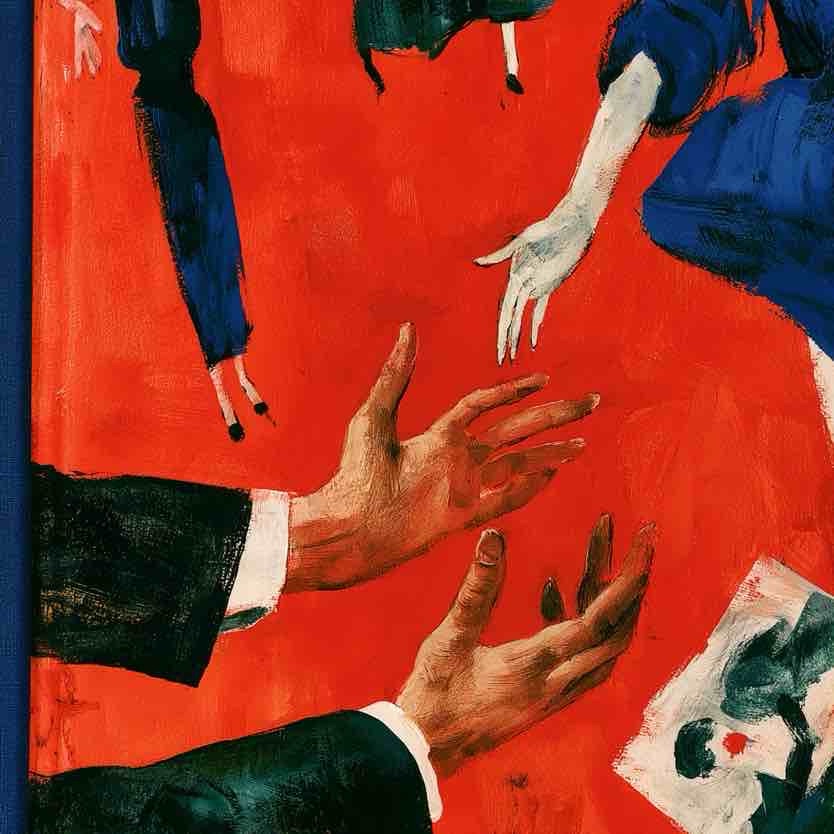
There was a time when being a good doctor meant knowing what to prescribe, what to diagnose, and what to say when the room got quiet. Today, it means all that.. and knowing where to find an affordable MRI.
Medicine has changed. The white coat still carries weight, but the landscape beneath it has become far more complicated. The modern physician isn’t just a healer anymore; they’re a guide, navigating patients through a labyrinth of insurance codes, referral networks, and pricing spreadsheets. It’s a system so tangled that even experts have to become detectives to make it work.
And yet, somehow, they do.
Ask any clinician today, and you’ll hear stories that sound less like “textbook medicine” and more like acts of quiet advocacy. Doctors scouring local directories to find imaging centers that don’t charge triple the market rate. Primary care physicians keeping informal lists of trusted labs, mental health providers, and community programs. Specialists spending their lunch breaks explaining coverage options to families who’ve hit bureaucratic walls.
This isn’t the medicine we train for. But it might be the medicine we need.
Because behind every clinical decision now lies another question: Can the patient actually access this? It’s no longer enough to know what the best care looks like; you have to know where, and how, your patient can actually get it.
That’s what caregiving looks like in today’s day and age. Not just diagnosing disease, but diagnosing dysfunction, in the system itself.
Here’s a physician diagnosing dysfunction, and coming up with more reasonable solutions.. herself:
View this post on Instagram
It’s easy to get cynical about how complicated healthcare has become. Every new technology promises simplicity, but the experience often feels more fragmented than ever. Portals, prior authorizations, copay calculators.. it’s a wonder anyone gets better. And yet, amid all this noise, there’s a quiet evolution happening. Doctors are getting creative again.
They’re building networks the system forgot to build. They’re partnering with local radiology centers that prioritize fair pricing and transparency. They’re crafting resource lists not for profit, but for practicality. It’s not glamorous work, and it doesn’t fit neatly into the billing codes. But it’s deeply human.
In a sense, doctors have become cartographers. The healthcare landscape is vast and uneven, and they’re drawing maps so patients can find their way through it. Each time a physician says, “I know a place that does this well and doesn’t overcharge,” it’s an act of modern compassion a form of medicine that doesn’t rely on prescriptions, but on persistence.

It’s also an acknowledgment that care isn’t just clinical; it’s logistical. For many patients, the greatest barrier to health is navigation. If you’ve ever tried to schedule an imaging appointment, you know: what should be simple often feels like a marathon. When a physician takes the extra step to guide a patient toward an affordable, accessible option, it’s more than convenience. It’s dignity.
This kind of care doesn’t make headlines, but it’s reshaping medicine from the inside out. It’s what happens when clinicians refuse to let compassion end at the chart. It’s small-scale, grassroots innovation. The type that grows not from policy but from empathy.
And maybe that’s what makes it so powerful.
Because while technology has transformed how we deliver care, it’s also revealed something timeless about the profession: medicine has always been about guidance. The Latin root of “doctor,” docere, means “to teach.” And teaching, whether it’s explaining a diagnosis or helping a patient choose between two imaging centers, is, at its core, navigation. It’s helping someone find their way through uncertainty.
It’s easy to romanticize the past, the era of house calls and handwritten notes. But maybe what we’re seeing now is a return to that same spirit, in intent. The modern “house call” doesn’t happen at the bedside; it happens in the digital maze of care coordination, where doctors are quietly re-humanizing the process one patient at a time.


That’s what caregiving looks like now: a blend of science and empathy, precision and persistence. The prescription pad has expanded to include community, creativity, and, yes, Google Maps.
It’s messy. It’s exhausting. And it’s still medicine.
Because when a doctor takes the time to find a radiology center that won’t drain a patient’s savings (when they make that extra call, write that extra note, or double-check that referral), they’re practicing something far more radical than efficiency. They’re practicing care. Real care. The kind that reminds us why people became doctors in the first place.
So here’s to the navigators. The mapmakers. The clinicians who guide, advocate, and improvise their way through a system that too often forgets the human it was built to serve.
They may not carry compasses, but they do something even better – they point people home.