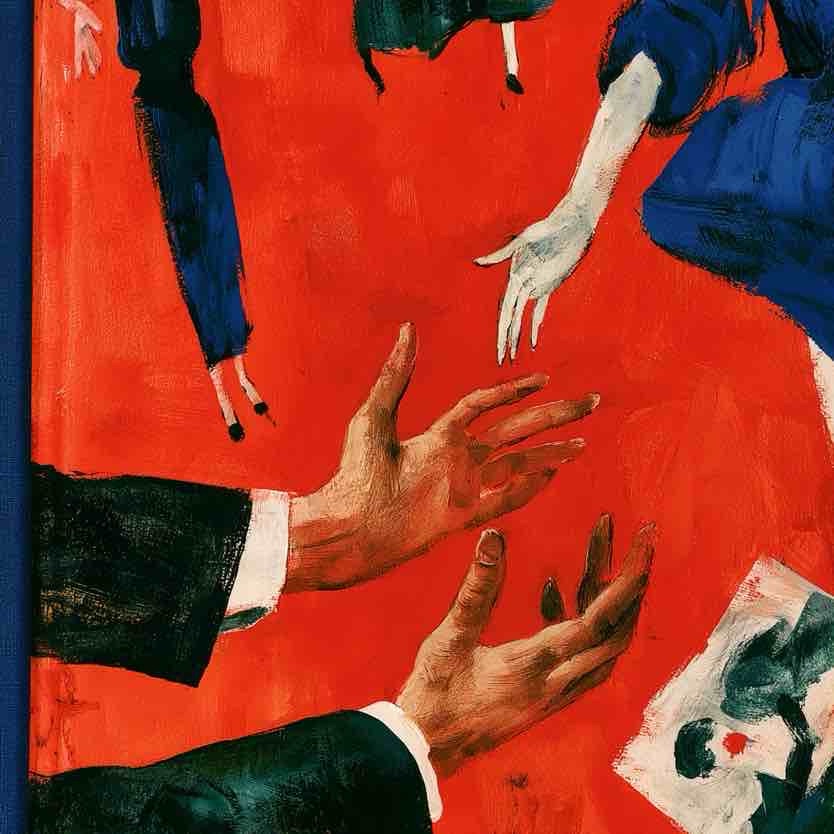
A 2022 American Medical Association survey found that 94% of physicians say prior authorizations delay necessary care for their patients. Seventy-eight percent report that these delays can lead to treatment abandonment entirely. Those numbers are staggering, but they don’t capture what it feels like to live inside those statistics.. to be the doctor on the other end of the line, spending hours on hold, transferred from one person to another, while a patient waits for a medication you know they need.
That’s exactly what happened recently when a physician tried to get Accutane covered for her patient. The process was supposed to be a “peer-to-peer” review, the industry term for a conversation between two equally trained medical professionals to determine whether a treatment is appropriate. In theory, that means a dermatologist reviewing the case of a patient who needs Accutane. In practice, it meant waiting to speak with multiple people who were not her peers at all – individuals with no dermatology background, no personal examination of the patient, and no real understanding of why the drug was prescribed.
Every transfer meant starting over, explaining the patient’s history from scratch. Each person on the other end had a different script to follow, a different checklist to tick. The minutes turned into hours, the hours into most of the workday, all for the possibility (not the promise!) that her patient might get the medication. In the end, the drug wasn’t approved. The patient was left without the treatment, and the doctor was left with a hollow exhaustion, having traded a day’s worth of potential patient care for a bureaucratic stalemate.
This is the part patients rarely see. When they sit across from us in the exam room and we say, “I’ll try to get your insurance to approve it,” what happens next often feels invisible. They don’t see the way we pace between calls, or how the hold music becomes the soundtrack to our afternoon, or how each disconnected line feels like a small, infuriating defeat. And maybe they shouldn’t have to. Our job, after all, is to handle this so they don’t have to. But when the system is this broken, when the odds are this stacked against timely care, it becomes not just a behind-the-scenes inconvenience but a public health crisis.
Your next commute, walk, or charting break could come with a smarter soundtrack. Explore our directory of expert-led podcasts created by healthcare professionals with something meaningful to say.
We tell ourselves we’re fighting for our patients, and we are. But each hour spent in an administrative maze is an hour we’re not diagnosing someone else, following up on results, or offering comfort in person. Multiply that by the number of doctors doing the same thing every day, and you begin to understand why burnout feels inevitable. It’s not just the clinical demands. It’s the knowledge that our training, our expertise, and our time are being siphoned away into processes that too often end in “no.”
The irony is that this gatekeeping is framed as cost control and quality assurance. Yet what is the cost of untreated acne that progresses to scarring? What is the cost of delayed care that leads to more invasive treatment down the road? What is the cost of a doctor who no longer has the energy to fight for the next patient? These aren’t numbers that appear on an insurance company’s balance sheet, but they’re real, and they’re paid in health, in trust, in morale.
We need to keep talking about this (not just among ourselves, but to patients, policymakers, and the public) because the myth of the “peer-to-peer” review is masking a system that too often prioritizes process over people. Until that changes, more doctors will spend more of their days in this strange limbo, chasing approvals that may never come, while the work we trained for waits. And patients will continue to wait alongside us, wondering why their doctor can’t simply write the prescription and be done with it.
When patients sit across from us in the exam room and we say, “I’ll try to get your insurance to approve it,” what happens next often feels invisible.
article written by The SoMeDocs Team Tweet This!