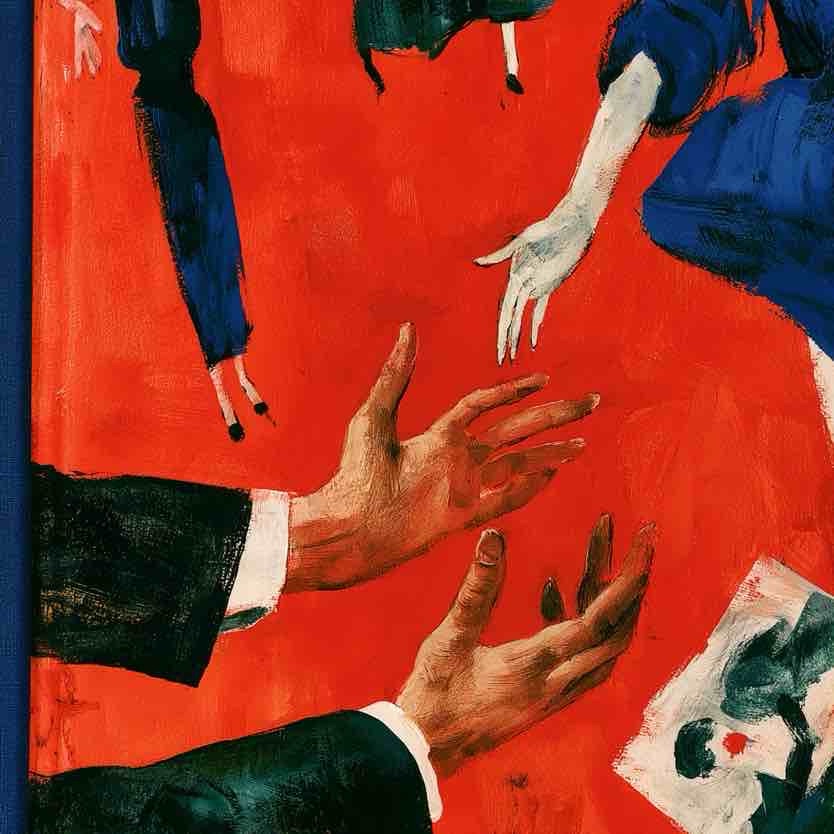
Spend enough time in health care spaces, and you’ll hear it whispered (or sometimes just bluntly stated) that nurses are more empathetic than doctors. It’s the kind of perception that sounds true at first pass, reinforced by years of cultural portrayals and patient anecdotes. Nurses are often remembered as the ones holding hands, offering comfort, or standing at the bedside through long nights. Doctors, by contrast, are more likely to be recalled for their brisk rounds, their hurried explanations, or their sharp focus on charts and test results. But is this difference really about empathy? Or is it about how health systems are structured, how roles are defined, and how empathy is perceived when expressed in different forms?
The narrative of the “empathetic nurse” versus the “detached doctor” has deep cultural roots. Television and movies almost always cast nurses as the nurturing figures, while doctors, though brilliant, are written as curt, distracted, or emotionally unavailable. Patients bring those expectations into real-world encounters, often without realizing it. When a nurse stays at the bedside and listens, it reinforces the stereotype. When a doctor delivers complex information quickly and moves on to the next patient, it seems to validate it. The difference, though, may not lie in actual empathy but in visibility. Nurses’ empathy is seen, felt, and remembered because it happens in direct relational time. Doctors’ empathy, in many cases, is expressed through the mental and emotional labor they perform outside the patient’s view.
Time is a powerful factor in shaping these perceptions. Nurses are typically at the bedside far longer than doctors, and that proximity naturally builds bonds. Patients may spend hours interacting with nurses during a hospital stay, but only minutes with the physician. Empathy often requires presence, and when presence is uneven, so too is the impression of compassion. Meanwhile, doctors are increasingly constrained by systemic pressures – short appointment slots, mounting documentation requirements, and a deluge of patients. It is not a lack of empathy that drives a doctor to cut an encounter short; it is the machinery of modern medicine forcing efficiency over connection.


Another piece of the empathy gap puzzle is how empathy manifests. For many physicians, empathy is not always expressed in the soothing words or gestures that patients easily recognize. Instead, it is embedded in careful diagnostic reasoning, in weighing risks and benefits with a patient’s best interest in mind, in advocating with insurers, or in late-night phone calls reviewing lab values. That kind of empathy doesn’t always look like a warm bedside conversation, but it is empathy all the same – a determination to alleviate suffering by solving problems. Unfortunately, when patients don’t see those efforts, the assumption becomes that they don’t exist.
There’s also the matter of emotional labor and how different professional expectations shape it. Nursing, as a discipline, has historically been tied to caregiving and emotional support, while medicine has been framed as decision-making and problem-solving. Society often rewards doctors for efficiency and accuracy, while nurses are celebrated for compassion. Both roles require empathy, but the way that empathy is packaged and performed differs. Doctors who show too much vulnerability may even be judged by peers as less authoritative. Nurses who don’t provide visible comfort may be judged as cold. Both professions operate under a double standard that complicates how empathy is expressed and received.
View this post on Instagram
(if the embedded video above doesn’t work, find it here)
The danger in reinforcing the empathy gap myth is that it drives a wedge between two professions that should be seen as complementary, not competitive. It risks alienating patients from their doctors, feeding into the already worrisome trend of mistrust in medical authority. If patients assume doctors lack empathy, they may discount important medical advice or turn instead to unvetted sources who appear more caring but lack expertise. That perception is not only unfair to physicians but potentially harmful to patients.
It also risks discouraging doctors themselves. Medicine is already grappling with record levels of burnout, driven in part by the emotional strain of caring for patients without always having time to process or express their feelings. When doctors are told (whether explicitly or implicitly) that they are less empathetic, it deepens the sense of isolation and inadequacy many already feel. The truth is that empathy exists abundantly among physicians, but it is often buried under layers of systemic dysfunction that prevent it from shining through.

What patients remember most vividly are the moments when empathy is made visible. The nurse who notices their pain before they do. The doctor who pauses for one extra minute, puts down the chart, and makes eye contact. These small acts resonate deeply, not because one profession is more capable of compassion, but because the conditions allowed it to be seen. If health care wants to close the empathy gap perception, it must create systems that give both nurses and doctors the time, space, and support to let their humanity show.
The myth of the empathy gap is exactly that – a myth. Nurses are empathetic. Doctors are empathetic. Both express it in ways shaped by their roles, their time, and the systems they work in. To pit them against one another is to miss the bigger truth: empathy is not the property of a single profession. It is the lifeblood of health care itself, flowing through everyone who enters the field with the goal of easing human suffering.