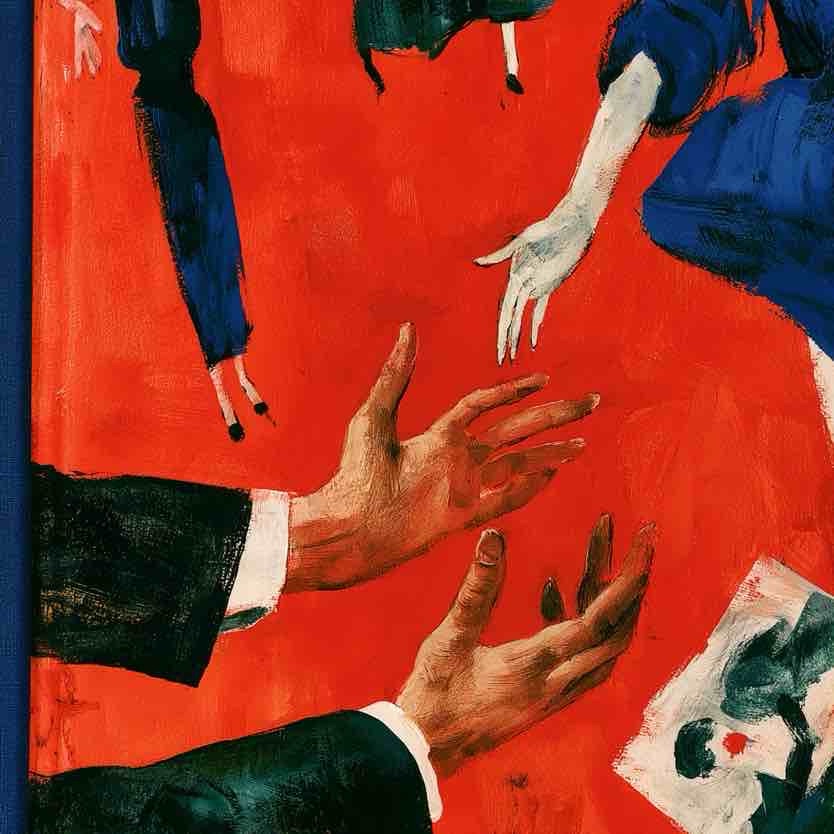
The white coat carries weight. It signals trust, competence, responsibility and often, quiet intimidation. Behind its crisp folds, most patients see only professionalism. But ask those within the system, and another truth emerges: some of the most toxic, antagonistic people in healthcare are also the most polished.
One doctor recently shared this uncomfortable reality, not in a conference room or journal, but on social media, a place increasingly used by physicians to say what can’t be said in formal settings. In a caption accompanying a brief clip of him getting ready for work, he wrote: “I’m a 30-year-old doctor and I’m not afraid to admit that… Some of the most toxic and antagonistic people I’ve met are doctors or on their way to becoming one. They smile during rounds, present perfectly, and are super charming, but are really just masters of image crafting. Behind closed doors they’re some of the most cutthroat, competitive, and downright cruel people I’ve met.”
You can watch the reel for yourself, right here.
It’s a statement that resonates, and not because it’s rare, but because it’s rarely said out loud.

Medical culture has long lionized brilliance, perfection, and composure. From the earliest days of training, students are taught not just to heal but to perform – to shine under pressure, present flawlessly on rounds, and fit into rigid hierarchies. What’s less often taught, or even acknowledged, is how these expectations can mask toxic behaviors and protect those who master the art of impression over intention.
The result? A professional environment where image is currency, and character can be optional.
This isn’t to say most doctors are cruel or disingenuous. Many are deeply compassionate, collaborative, and emotionally intelligent. But the system doesn’t always reward those traits. It rewards those who conform to its metrics of success (board scores, letters of recommendation, glowing evaluations) even if those achievements are built on fear, backstabbing, or manipulation.
In this context, toxic behavior becomes self-protective. The colleague who undermines you in front of attendings, the resident who hoards procedures, the supervisor who uses sarcasm as a weapon – these aren’t anomalies. They’re byproducts of a culture that subtly endorses ruthlessness, so long as it’s dressed in charm and delivered with a smile.
What makes this particularly damaging is the silence around it. Medical students and junior residents are often too afraid to speak up, knowing that evaluations, references, and reputations are fragile and hierarchical. Institutions may preach wellness and collegiality, but when it comes to confronting toxic behavior , especially from high-achieving individuals, accountability is rare. After all, who wants to risk losing the star resident or the publish-ready fellow?


But the costs are real.
Physician burnout, moral injury, and mental health struggles are not just the result of long hours or difficult cases, they’re also the byproduct of working in environments that lack psychological safety. When kindness is seen as weakness, when vulnerability is punished, when cruelty is tolerated as long as it’s cloaked in competence, people suffer. Good doctors leave. Promising students grow cynical. The profession eats its own.
That’s why this kind of honesty (even when buried in a caption) matters. Because every time someone speaks openly about the shadow side of medicine, they make space for others to exhale, to say “yes, I’ve seen it too,” and to start demanding something better.
We cannot afford to keep pretending that toxicity is rare or accidental. We cannot keep protecting reputations at the expense of real reform. And we certainly cannot keep training generation after generation of physicians in environments where appearing good is valued more than actually being good.
The change has to be cultural, not cosmetic. It means revisiting what we reward in evaluations. It means listening seriously to complaints even when they come from “below.” It means recognizing that emotional maturity, humility, and ethical integrity are not soft skills. They are essential skills. And it means challenging the idea that the best doctors are those who can dominate a room, ace an exam, or impress the right person.
We need to stop whispering about the toxic behavior we all see and start naming it, confronting it, and removing the systems that protect it. Not because it’s easy. But because the future of medicine, and the humanity of those who practice it, depends on it.
Not all doctors are kind. And it’s time we stopped acting surprised.