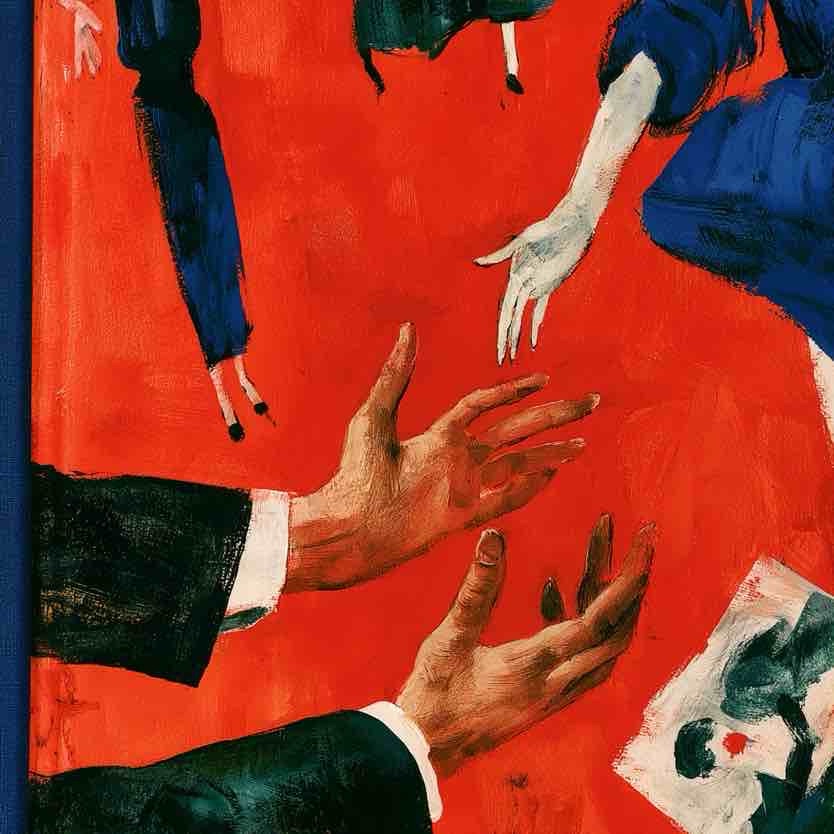
I didn’t know I had lost it. Or that I needed it so badly.
But as the season of COVID went into its second year I discovered that I was missing something other than just social gatherings and travel. There was an element of fun and laughter that had been misplaced.
The last few years have not been fun – and I think most would agree when we look back upon 2020 and 2021 in particular. The pandemic continued. Changed social interactions and work/school environments had challenges. The longer it went on, the more it became harder to use humor to manage the ongoing stress. I just couldn’t muster the energy.
Added to the worldly challenges we faced, my mom passed away from stage four esophageal cancer in 2021. And since the Fall of 2020 I have been out of my clinical work due to vestibular migraines and an esoteric condition called persistent postural-perceptual dizziness, or 3PD, which leaves me with headaches, dizziness and disequilibrium.
In a nutshell: not fun.
While navigating the tidal wave of change I have been fortunate to have lots of support – both from my family & friends, from my vestibular cognitive behavioral therapist (yes, there is such a thing!), and also, from my own physician life coach.
But being an OBGYN physician and delivering babies has been my identity for the better part of my adult life.
So when these neurological conditions arose and that identity was challenged – while in the midst of a world-wide pandemic no less – well, my very human brain had a lot of thoughts about it. And I had lots of emotions as well.
I could not control these circumstances. They just were. But, the way I was thinking about these new life circumstances was NOT making me happy or joyous – rather, the thoughts I was having filled me with fear, despair, and utter sadness.
On the one hand, I was grateful it was nothing more serious (the lesion on my head MRI was benign and not likely related to my symptoms) – and I finally found my medical team which was going to get me well.
On the other hand, my world as I knew it had changed so dramatically overnight that I was not finding anything – or anyone – fun, funny or light. Not by a long shot.
“My world as I knew it had changed so dramatically overnight that I was not finding anything – or anyone – fun, funny or light. Not by a long shot.”
And that is saying a lot, because my husband is probably one of the funniest humans on the planet. Without trying. I was not depressed; but humor and laughter did not come as easily like they once did amidst all the ick of that time. There was an air of seriousness that was pervasive.
So if I did not want to feel like a victim of these circumstances anymore, what could I do? How could I look at this differently?
Enter coaching.
My human brain is with me all the time. And because I can have upwards of 70,000 thoughts per day – give or take – I wanted to optimize them so that they were working in my favor. Helping me out. Control the things I could control.
Recognize and remember I do have some choice and agency amongst the external chaos.
My coach challenged me to come up with 3 simple things I could do each day – just for me – before I put my head on the pillow each night.
Whittle them down to mantra-like statements. A self-care baby step.
At that point, I struggled to come up with one.
I contemplated and then arrived at just one.
What did I choose, you ask?
“Find the Funny.” She looked at me – and I’m not sure she thought I was serious. She asked me to explain.
I wanted to find something every day to make me laugh or smile amidst the absurdity of my current circumstances.
On purpose.
Because it made me feel good.
It made me feel more like myself.
It helped me be right there in that very moment.
Present.
Simple. That was it.
But it wasn’t necessarily easy and I didn’t always want to do it.
But it was my minimum baseline for my day.
So that was my homework: Find the Funny.
And what I found was SO interesting.
I resisted it at first. My brain offered up lots of reasons why I shouldn’t find things funny. Why things were so serious that I just should not be laughing, I should be serious. Hmmmm….Really?
Was that true?
My husband and daughter are absolutely hysterical – and I even initially resisted giving in to the humor of their ridiculousness.
But eventually, my mirror neurons could not resist the urge to conform – and together we were giggling at some silliness.
Initially, I had to consciously allow myself to be free to laugh when they said or did things that were funny, rather than choosing to view them as irritating or annoying.
That’s right, it was a choice I was making.
And when I chose to allow the funny, to embrace it, it felt WONDERFUL.
And soon, the funny became easier to find. It became easier to feel. It became easier to allow.
There were days, especially when I started the exercise, when the funny was not readily available. I could NOT find it, conjure it, will it to be – no matter what I tried.
So I found Dan Levy & the crew on Schitt’s Creek and Ted Lasso, and I Found the Funny there on my TV, grateful for the opportunity to smile and laugh out loud. Serotonin. Dopamine. All the neurotransmitters working their magic.
Turns out when I started to Find the Funny, I noticed my mood lightened, softened…
Soon I found my brain looking for the funny each day, excited to find it in places big and small. My shoulders relaxed. I smiled more. Deep exhalations then followed.
And each week, I also found that I was giddy recounting how I found the funny and shared the highlights with my coach. Even after the fact, I found the funny even funnier.
The unexpected delight was how it became a family habit, so my daughter and husband also now look to “Find the Funny”, my daughter delighting in my dry sense of humor that cracks her up.
Finding the funny doesn’t mean poking fun or minimizing the suffering of very real pains we experience in the world. It doesn’t mean masking our pain or putting on a happy face. No toxic positivity.
Finding the Funny is a way of retraining our brains to delight in the joy and laughter of the little quirky things in life all the way to the full on, fall-to-the-ground-in-tears-laughing, hysterical things we do that we can view with perspective and some distance.
When we give ourselves permission to be human. And we delight in our humanity.
It helps us to remind ourselves to delight in ALL of the emotions we have the privilege of experiencing. And that it is OK to find the funny even when it may seem lost or a bit harder to find.
There are data to support that laughter really is good medicine because it can help: muscle relaxation, improve mood, boost immunity, and increase resilience. It improves an overall sense of well-being.
And here are a couple of links in case you are curious:
https://www.sciencedirect.com/science/article/abs/pii/S0002962915361929,
Finding the funny has elevated the quality of my life, from the tiniest giggle to the heartiest guffaw.
So, as we are in the holiday season, I offer the “FIND THE FUNNY” challenge to you.
Allow yourself to find the humor in the ordinary things, the absurdities. Give yourself permission.
When it seems to be a stretch, let the humor professionals help and watch some funny on TV (Ted Lasso, anyone?)
However you get your mirthful laughter on, I invite you to give it a try.
Find Your Funny. Daily.
No Rx required.