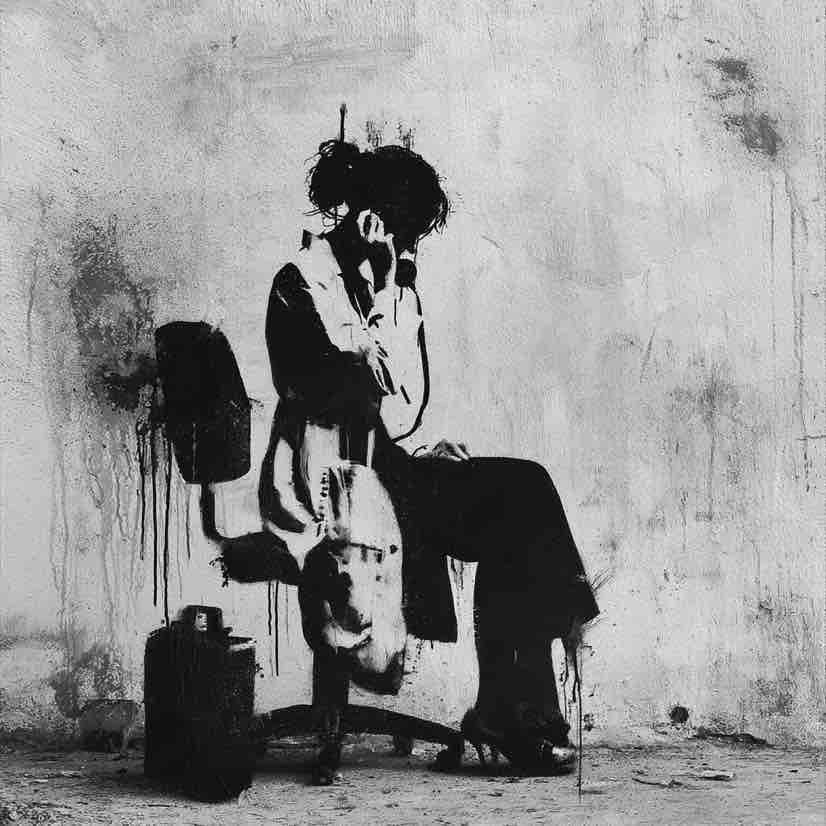
One of the questions I hear most often from adult children caring for aging parents isn’t actually about dementia, medications, or long-term care.
It’s much more personal.
“Why don’t I feel like myself anymore?”
They tell me they’re anxious all the time. They’re more forgetful. Little things make them cry. They’re irritable with their spouse or their kids. They lie awake replaying conversations or running through tomorrow’s to-do list.
And very often, they’ve already decided that the problem is them.
They’ve become less resilient. They’re not coping well. Maybe they’re depressed. Maybe they have an anxiety disorder. Maybe they should be handling all of this better.
Before we talk about diagnoses, I usually ask a much simpler question:
What does your life actually look like right now?
And that’s usually where things become clearer.
They’re raising teenagers while coordinating medical appointments for an aging parent. They’re helping with homework one minute and discussing their mother’s memory testing the next. They’re working, managing a household, checking on a spouse, figuring out insurance, refilling prescriptions, arranging transportation, worrying about whether Dad should still be driving, and somewhere in there they’re supposed to exercise, sleep eight hours, maintain friendships, and remember to schedule their own mammogram.
Well, of course you’re anxious.
Look at what you’re carrying.
That’s one of the things I think we sometimes miss when we talk about mental health. Distress is not synonymous with disorder.
Sometimes anxiety is a symptom. Sometimes it’s information.
If you’re waiting for the next fall, the next hospitalization, or the next phone call from your parent’s doctor while simultaneously worrying about your child, your marriage, your job, and the fourteen things you forgot to do yesterday, feeling on edge isn’t necessarily evidence that something has gone wrong with your brain.
Your brain may be accurately recognizing that you have too much to manage.
This is the reality of the sandwich generation.
Earlier generations certainly cared for aging parents, but many adults today are doing it while they are still deeply involved in raising children, building careers, maintaining relationships, and managing increasingly complicated households. The responsibilities don’t arrive in neat chapters. They overlap.
And much of the work is invisible.
People may see you take your father to a doctor’s appointment. They don’t see the three phone calls it took to schedule it, the portal messages, the medication list you updated, the insurance issue you handled, the argument about whether he needed to go in the first place, or the two hours afterward you spent wondering whether the doctor understood what you were trying to explain.
That mental load doesn’t disappear when the appointment ends.
It follows you to work. It sits with you at dinner. It wakes you up at 2 a.m.
As a psychiatrist, of course I take symptoms of anxiety and depression seriously. Anxiety disorders and depressive disorders are real medical conditions, and sometimes what begins as understandable stress does evolve into something that needs treatment.
But context matters.
We understand this everywhere else in medicine. We don’t interpret a symptom without asking what was happening when it occurred. Emotional symptoms deserve the same thoughtful assessment.
So when someone tells me, “I’m anxious,” I want to know more.
Are you experiencing anxiety that is disproportionate to what’s happening in your life? Or are you carrying an objectively enormous amount of responsibility and having a very human response to it?
Those aren’t necessarily the same thing.
And the distinction matters because the solution can’t always be “cope better.”
Sometimes the problem isn’t that you need another breathing exercise, a better planner, or more resilience.
Sometimes the problem is that the system you’ve created, or inherited, is asking one human being to do the work of several.
You can meditate. You can exercise. You can journal. You can work on your sleep and practice self-compassion. Those things can absolutely help.
But we also have to be willing to ask a harder question:
What can come off your plate?
Your brain may be accurately recognizing that you have too much to manage.
Can someone else take your parent to an appointment? Can groceries be delivered? Can siblings take responsibility for specific tasks instead of repeatedly asking you what they can do? Does your parent need more support at home? Are you trying to preserve an arrangement that no longer works because changing it feels too painful?
That isn’t failure. It’s problem-solving.
One of the ironies of caregiving is that people who are extraordinarily compassionate toward everyone around them can be remarkably unforgiving toward themselves.
If your closest friend told you she was raising children, caring for an aging parent, working, managing a household, worrying about finances, navigating medical decisions, and trying to maintain her marriage and her own health, would you tell her she needed to become more resilient?
Probably not.
You’d probably say, “That’s a lot.”
Sometimes we need to extend ourselves the same courtesy.
None of this means ignoring symptoms that are persistent, overwhelming, or interfering with your ability to function. If you’re struggling, talk to someone. Get evaluated. Accept help.
But don’t automatically assume that every uncomfortable emotion means something is wrong with you.


The sandwich generation occupies an extraordinary, and difficult, place in the lifespan. You’re helping one generation become independent while another becomes increasingly dependent. You’re trying to protect your parents’ dignity without sacrificing your children’s needs, your relationships, your career, your health, or your own identity in the process.
That’s a tremendous amount to hold.
So if you’ve been wondering why you’re anxious, distracted, irritable, exhausted, or simply don’t feel like yourself anymore, don’t start by asking, “What’s wrong with me?”
Start by asking:
“What am I carrying?”
Because sometimes the answer isn’t that you need to become better at carrying it.
Sometimes you need help putting some of it down.