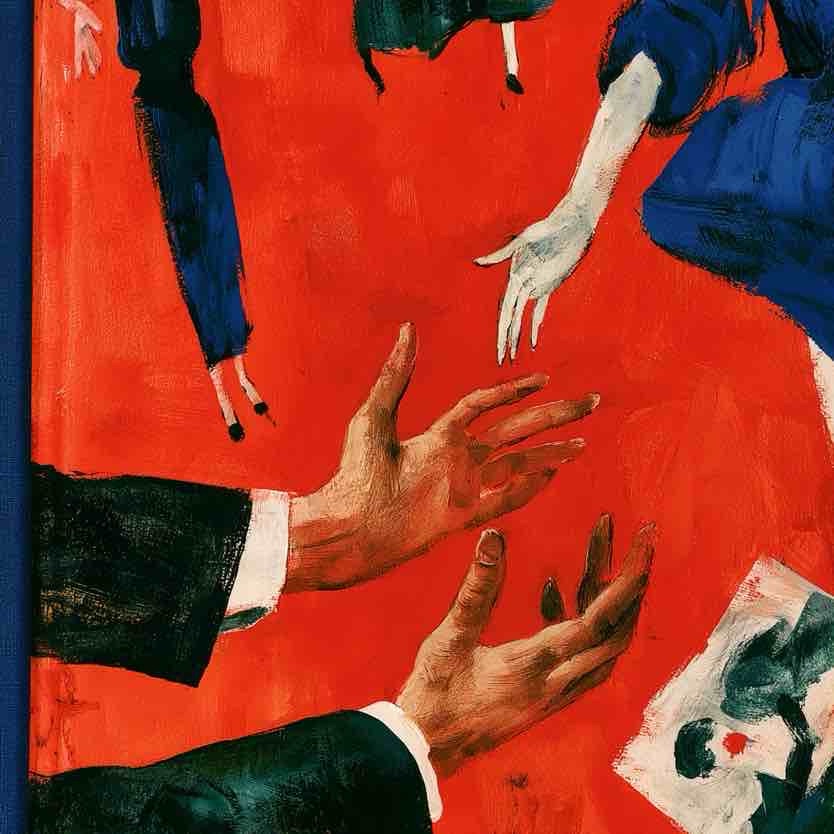
In an age when physicians once commanded universal respect for their dedication to healing and empathy, a surprising phenomenon has emerged in online communities: doctors bullying doctors. It seems counterintuitive, given the fundamental ethos of medicine—to do no harm—but as many professionals have taken to Facebook groups and other online spaces to connect with peers, a troubling pattern has surfaced.
For those unfamiliar, many physicians today participate in private online forums to share advice, discuss cases, and navigate the challenges of the profession. These communities are often spaces for camaraderie, support, and commiseration. However, they are also becoming battlegrounds where political and social differences spark vitriolic exchanges.

I’m part of one such group, and what I’ve witnessed there has been disheartening. Instead of support and understanding, there’s a growing culture of judgment and division. It feels like the group is dominated by loud, left-leaning voices, while conservative-leaning members remain silent or, when they do speak, are quickly met with backlash. The sheer hostility is startling.
This is not an issue of simple disagreement. Disagreement is inevitable and, in fact, healthy in a diverse profession like medicine. What’s happening here is more insidious. It’s a form of online bullying, where some voices are amplified while others are silenced, often with personal attacks. Those who lean politically conservative, or even those who identify as moderates, are painted as uncaring or unfit to be doctors simply because their views do not align with the majority.
The most vocal members in these groups often paint an overwhelmingly negative picture of the world—focusing on political turmoil, social decay, and environmental catastrophe. For those of us who remain hopeful about the future and believe that our choices, including our votes, can help build a better society, it’s disheartening to see this relentless pessimism. Even more troubling is how quickly a different perspective is dismissed or attacked.
As doctors, we’re trained to approach issues analytically, consider multiple perspectives, and treat people with dignity. Yet, within these groups, the same individuals who show compassion to patients seem to abandon that principle when engaging with colleagues who disagree with them. If a physician dares to express hope for the current administration or a belief that the country is moving in the right direction, they risk being ostracized, mocked, or labeled as out of touch.
This isn’t just about politics; it’s about the culture we’re creating as professionals. Medicine has long been a field that values collaboration and mutual respect. But what happens when even doctors can’t engage in civil discourse? What message does that send to future generations—our children—who are already growing up in a world dominated by cancel culture and polarized debates?
The irony is that most of us who feel silenced aren’t looking for a fight. Many doctors, by nature, are soft-spoken and conflict-averse. We entered this field because we care about humanity and want to help others. We aren’t interested in political grandstanding. We simply want to feel like our voices matter too.
So, how do we fix this?
First, we need to foster spaces that truly encourage open dialogue. Online physician communities should be places where all voices—left, right, and center—can be heard without fear of ridicule. Moderators have a responsibility to ensure that discussions remain respectful and inclusive.
Second, we must recognize that disagreement doesn’t equate to disrespect. It’s possible to hold different political or social views and still be a compassionate, competent doctor. Our value as professionals isn’t defined by our personal beliefs but by how we care for our patients.
Lastly, we need to remember the example we’re setting. The behavior we model in these communities extends beyond the digital realm. It shapes how we interact in our clinics, hospitals, and classrooms. It influences how our children will approach disagreement in their own lives.
The future of medicine—and society—depends on our ability to bridge divides, not deepen them. If we can’t show respect and empathy to each other, how can we expect the same from our patients, peers, and communities?
Let’s choose kindness, even when we disagree. After all, isn’t that what being a doctor is all about?