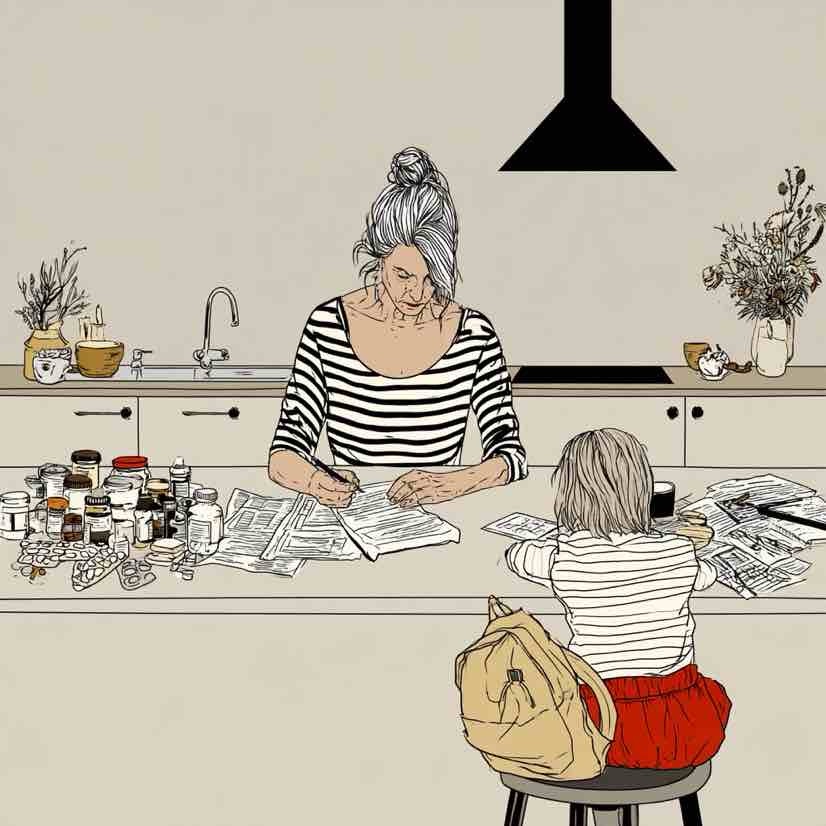
Women physicians learn early that there is a narrow corridor in which they are expected to exist. Step outside it, and the feedback comes quickly. Speak up, and you are too assertive. Hold back, and you lack confidence. Show emotion, and you are unprofessional. Stay composed, and you are cold. Be decisive, but not intimidating. Be warm, but not inefficient. Be available, but not demanding. Be excellent, but not threatening.
It is exhausting not because any single expectation is unreasonable, but because they contradict one another.
Many women physicians describe this experience long before they have language for it. It shows up in evaluations that feel vague but heavy. In comments like “great clinician, but…” In leadership feedback that praises effort while questioning readiness. In the subtle recalibration women perform in meetings, patient encounters, and negotiations, constantly adjusting tone, posture, and phrasing to avoid crossing an invisible line.
The line is rarely stated, but it is always enforced.

This double bind does not exist because women physicians lack skill or confidence. It exists because medicine, like many professional systems, was built around a default that does not account for them. When women enter spaces designed without them in mind, they are often measured against conflicting ideals at the same time. Too much of one trait. Not enough of another. Never quite right, yet somehow always responsible for fixing it.
What makes this particularly difficult in medicine is that ambiguity is rarely tolerated. Doctors are trained to seek clarity, diagnose problems, and correct errors. When the feedback itself is incoherent, it creates a quiet kind of distress. How do you improve when the target keeps moving? How do you grow when the rules change depending on who is watching?
Over time, many women physicians internalize this tension. They begin to pre-edit themselves. They soften statements. They hedge opinions. They absorb extra work to prove commitment while minimizing their presence to avoid backlash. None of this is taught explicitly. It is learned through observation, correction, and survival.
This is not a personal failing, but an adaptive response.

The cost of this adaptation is rarely discussed. It shows up as fatigue that cannot be explained by hours alone. As hesitation around leadership opportunities. As a reluctance to be visible, even when expertise is unquestionable. Being seen feels risky when visibility has historically come with scrutiny rather than support.
This is why conversations about voice and presence matter, especially for women physicians. Not because everyone needs a platform, but because self-definition is a form of protection. When others define you, they also limit you. When you define yourself, you create context that reduces distortion.
Visibility, in this sense, is not about self-promotion. It is about coherence. It allows a physician to be encountered in full sentences rather than fragments. To be understood over time rather than judged in moments. It offers continuity, which is something women physicians are often denied.
Within spaces like SoMeDocs, this continuity becomes possible in ways traditional systems rarely allow. Series-based conversations, essays, and discussions let women physicians show how they think, not just how they perform. They allow room for complexity, evolution, and contradiction, the very things that are often flattened in evaluations and feedback.

Importantly, this does not mean women physicians must become louder, bolder, or more visible than they wish to be. It means that when they do choose to speak, there is space for their voice to exist without being immediately categorized as too much or not enough. Context changes perception. Repetition builds trust. Familiarity softens judgment.
Women Physicians Day is often framed as a celebration, but perhaps it is better understood as an invitation. An invitation to notice the impossible math women physicians are asked to perform every day. To recognize that many are not struggling because they lack confidence or clarity, but because they are navigating contradictory expectations with remarkable restraint.
Honoring women physicians does not require platitudes about strength or resilience. It requires honesty. About the systems they work within. About the compromises they make. About the ways they continue to show up despite being measured by standards that were never designed to be met simultaneously.
Being too much and not enough at the same time is not a personal problem to solve. It’s a structural tension to name. And naming it is the first step toward changing how women physicians are seen, heard, and allowed to exist on their own terms.