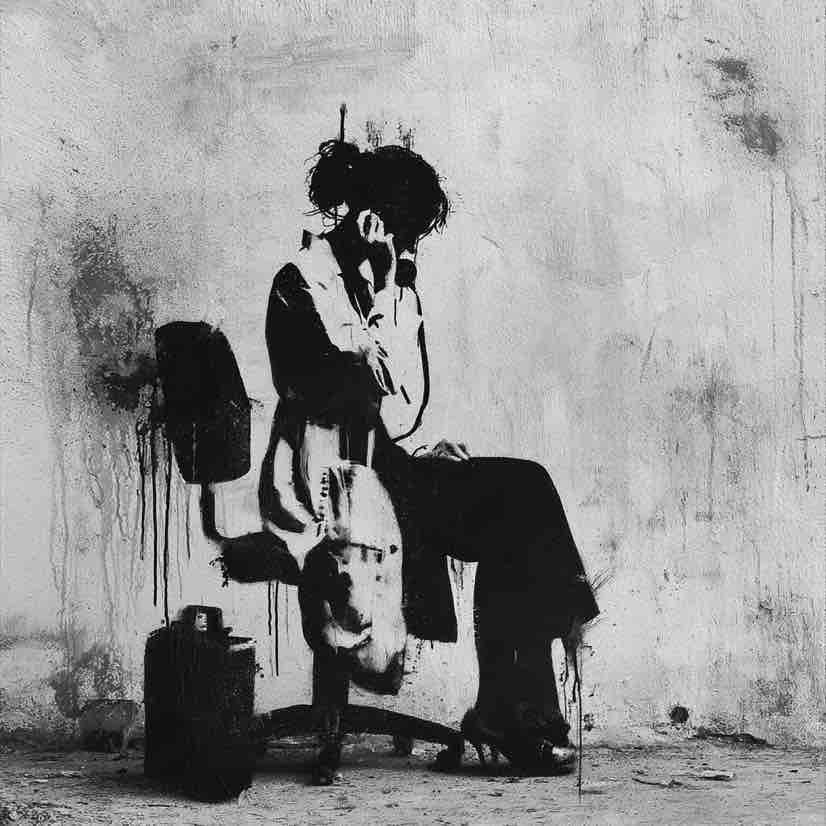
They say illness changes you, but no one explains how slowly and subtly it happens. You don’t wake up one morning and feel like a different person. Instead, you feel pieces of yourself slip away during appointments, tests, follow-ups, and explanations you don’t fully understand but pretend to. This anonymous patient, whose identity we’re protecting to preserve their privacy, described it as “watching my life from outside my body,” a gradual unraveling that took place not in dramatic hospital scenes but in the quiet, fluorescent-lit exam rooms where they spent more time than they ever expected to.
“I used to feel like I had a personality,” the patient said. “A sense of humor, interests, an identity. Now I feel like a list of symptoms wearing a person suit.”
What makes their story particularly striking, and particularly valuable for clinicians, is how ordinary it sounds. There’s no single rare disease, no catastrophic diagnosis, no nightmare scenario. Just the slow erosion of identity that happens when someone becomes deeply entangled with the healthcare system. It’s the kind of erosion that physicians often witness but rarely recognize for what it is.
The patient described a moment in their doctor’s office that changed everything, though the doctor likely didn’t notice at all. “He walked in and immediately started reviewing lab numbers, scans, and meds. All important, of course. But he didn’t say hello. He didn’t ask how I was feeling as a person. It was like he was seeing a chart instead of a human.”
They paused before adding, “After that visit, I realized I didn’t remember the last time someone in a clinic treated me like myself instead of my condition.”
The patient explained that every medical encounter seemed to chip away at the parts of their identity that once defined them. They went from being a parent, a professional, a partner, a friend, to a problem to solve. A work-up. A diagnostic puzzle. An insurance claim. A follow-up appointment waiting to be scheduled.
“What’s strange,” they said, “is how quickly everyone around you adjusts to the ‘new you.’ They start describing you by your illness. They ask about your symptoms before they ask about your life. You become the patient version of yourself, and pretty soon, even you forget who the other version was.”
There was a specific turning point: a medical assistant referred to them, in passing, as “the migraine in Room 3.” It wasn’t malicious. It wasn’t even intentional. It was habit. Clinical shorthand. But to this patient, it felt like confirmation: they were no longer a whole person in the eyes of the system. They were a diagnosis with a pulse.
“It hit me harder than the illness itself,” they admitted. “Because if everyone sees you as your condition long enough, you start to see yourself that way, too.”
Their story reveals something physicians rarely get to hear directly: how deeply patients internalize the identity assigned to them in clinical spaces. While clinicians move from room to room, mentally switching cases and conditions, patients often stay stuck in the one role they inhabit inside those walls: The Sick One.
“You start introducing yourself differently,” the patient said. “Not on purpose. But in your head. Before, I’d think, ‘I’m someone who likes hiking and cooking and traveling.’ Now I think, ‘I’m someone who has this condition.’ It becomes the headline of your life.”

What this patient wanted most wasn’t better outcomes or more tests, but recognition of their humanity amid the medical machinery. They wished someone had asked about the parts of them untouched by illness. They wished a clinician had said something like: “Tell me who you were before this. Tell me who you still are.”
“It sounds dramatic,” they said, “but I miss myself. And I don’t know how to get back to who I was.”
Their experience raises a powerful question for clinicians: How often do you meet a patient’s illness before you meet the patient? How often do you unintentionally reinforce the idea that their identity has shrunk to the size of their chart?

For this patient, the loss of identity didn’t come from the disease alone. It came from the repetitive, clinical stripping-away of their personhood. It came from being seen only in pieces. Labs here, symptoms there, risks somewhere in between. Never as a whole.
Toward the end of our conversation, they said something that lingers: “I don’t need my doctor to fix everything. I just need him to look at me and see someone who existed before the diagnosis, and still exists underneath it.”
What they want is what every patient wants, whether they can articulate it or not: to feel like themselves in a place where it’s easy to feel lost.
And sometimes, the greatest act of care isn’t solving the medical problem, but helping a patient remember they are more than the medical problem at all.