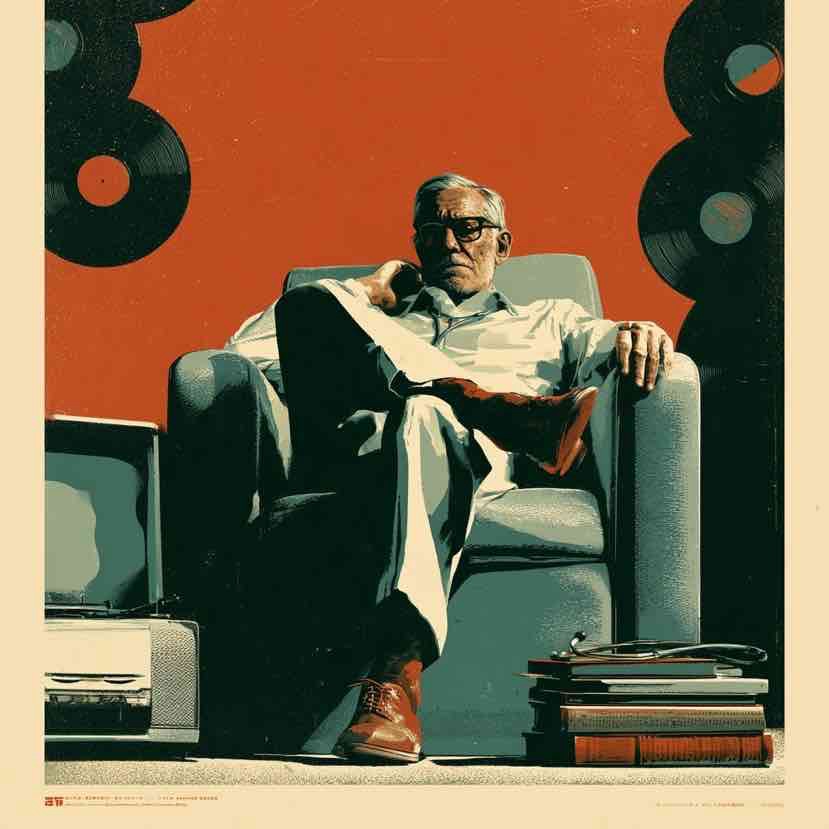
Billy Gordon taped basketball games for nearly four decades. Thousands of them. He labeled each VHS cassette meticulously (teams, records, scores) and stacked them in black crates that eventually surrounded his bed in a small basement room. He was not a broadcaster, historian, or archivist by title. He worked nights as an airport baggage handler.
Yet when he died, his family was left holding something more than obsolete media: a life’s work, preserved frame by frame, waiting for someone who could see its value.
That story lingers because it is familiar; not in its details, but in its shape. Many of us know someone like Billy. Or we are someone like Billy, driven by a singular devotion because it matters, even when no one is watching.
![Non-Clinical Conference: A Beginner's Guide [CONFERENCE]](https://doctorsonsocialmedia.com/wp-content/uploads/2024/07/img_2306-1-1024x1024.jpg)
Consider another individual who has spent decades amassing thousands of CDs and live concert recordings: laser discs, DVDs, radio broadcasts captured before they vanished into static. He is still alive, healthy, and clear-eyed enough to know that no one wants what he has saved. His children are polite, uninterested. He fears the landfill more than death.
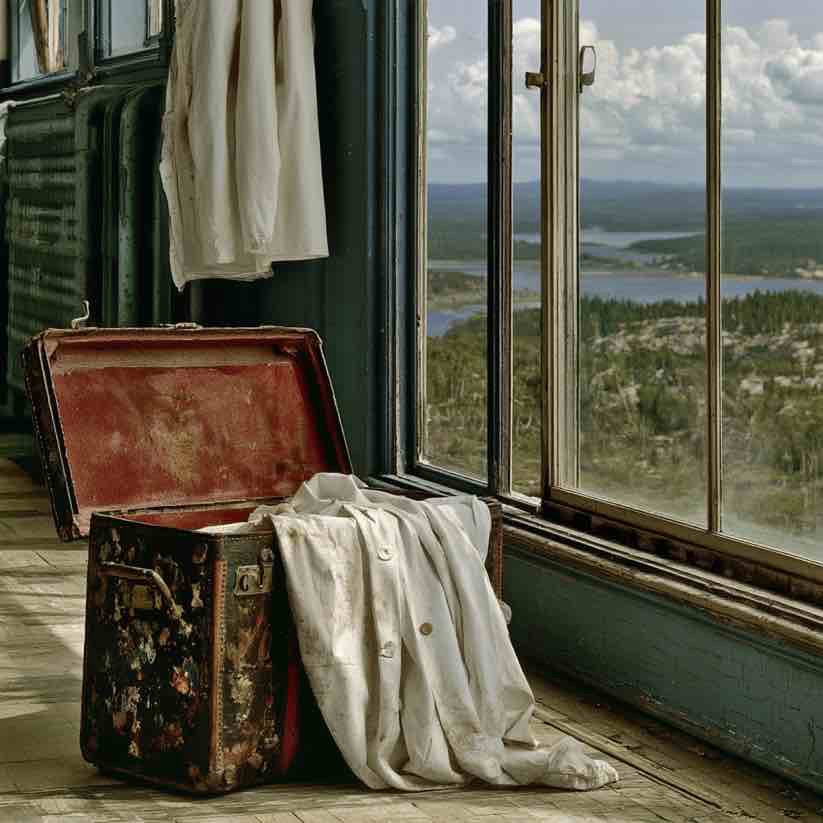
And then there is Sir Isaac Newton, whose private papers, locked in a metal chest for nearly two centuries, revealed an obsession with alchemy and biblical prophecy so consuming that it unsettled generations of scholars. When those manuscripts were auctioned in 1936, the scientific world was shocked; not by their brilliance, but by their strangeness. The father of modern physics had lived a parallel intellectual life no one was meant to see.
What drives people to this kind of devotion? And why does so much careful, consuming work go unrewarded, or worse, unnoticed?
We tend to romanticize passion when it produces public achievement: the Nobel laureate, the bestselling author, the surgeon whose name becomes attached to a technique. But there is another category of passion (quiet, private, archival) that operates without applause.
These individuals are not chasing recognition. They are chasing coherence.

Billy Gordon didn’t tape games to impress anyone. He taped them because basketball had rules, continuity, memory. In a chaotic world, you could rewind, relabel, and preserve something intact.
In medicine, versions of this instinct appear everywhere.
There is the internist who keeps decades of handwritten notebooks, and not because the electronic record failed, but because writing by hand was how they thought. The pathologist who maintains a slide archive long after digital pathology arrives, convinced (correctly) that something is lost when glass becomes pixels. The psychiatrist who keeps anonymized transcripts of therapy sessions, not for publication, but because the evolution of language under distress feels too important to discard.
These are not hobbies. They are parallel practices.
Medicine tolerates them quietly, sometimes indulgently, often dismissively, until the physician retires or dies. Then the question surfaces abruptly: what do we do with all of this?
There is a word that applies here, though we rarely use it outside romance: unrequited.
Unrequited devotion.
Unrequited labor.
Much of medicine is built on effort that is never formally rewarded: late nights, moral residue, emotional labor that never appears in metrics. But these collections represent something even more stark: work that was never meant to be paid.
Newton did not publish his alchemical writings because he knew they would be ridiculed. Billy Gordon recorded games no one asked him to record. Their reward was internal coherence; the sense that something fragile had been saved from erasure.
In medicine, this instinct often shows up in physicians who document stories no one else has time to hear. We collect because we know how easily truth disappears.
Clinicians are trained to extract salient facts and discard the rest. Yet many resist that instruction instinctively. We remember the patient who cried when no one was watching. The sentence spoken in passing that changed everything. The story that didn’t fit the problem list but explained the entire visit.

Some physicians become storytellers. Others become keepers of meaning. Many become both. Collecting first, shaping later. Long before the term “narrative medicine” existed, clinicians were already doing this work: listening closely, writing things down, and trusting that understanding would follow.
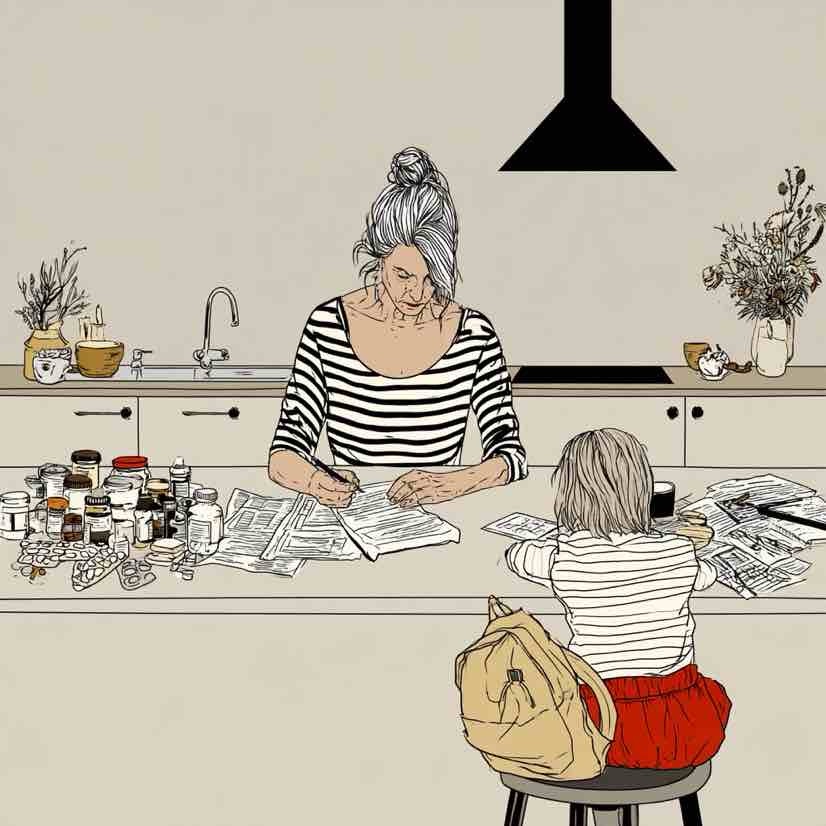
They keep old charts. Old notes. Letters written before templates compressed language into sameness. Their families often don’t understand why.
“These are just papers.”
“These are old tapes.”
“No one uses CDs anymore.”
But to the collector, these objects are proof that something once mattered deeply.
The common thread in all of these examples is not obsession for its own sake, but fidelity; to a subject, a moment, an inner calling that does not depend on validation.
Medicine is both fertile ground for this instinct and hostile to it. We celebrate efficiency. We reward productivity. We punish deviation. Yet without preservation, medicine forgets who it is and how it arrived here.
Every generation believes it is inventing compassion anew. Every generation is wrong.
The quiet collectors (the note-keepers, the archivists, the physicians who write essays no journal wants) serve as a kind of immune system of memory. They guard against amnesia, simplification, and revisionism. They work without guarantees of recognition and often without heirs.


Billy Gordon’s family doesn’t want money for his tapes. They want recognition of intent. Someone who understands that what looks like clutter is actually devotion made visible.
That is the same wish many physicians carry privately. That the notes mattered. That the stories mattered. That someone might someday understand why they couldn’t throw them away.
I know this not as an observer, but personally. I am the man with shelves of CDs and concert recordings, laser discs, DVDs, radio broadcasts captured late at night because something about the moment felt too alive to let it disappear. I am healthy, still working, fully aware that no one is waiting to inherit any of it. My children are kind, pragmatic, uninterested. They should be.
For years, I told myself this was just collecting. But that was never quite true. What I was really doing was witnessing. Preserving moments before they vanished. The same instinct that made me keep class notes from lectures written before ambient AI became the note-taker. The same instinct that made me write things down that didn’t fit neatly into charts, diagnoses, or careers we’re taught to build.
Sometimes the archive is not a hobby. It is a form of witnessing.
And sometimes, when no one is watching, it is the most honest work we do.