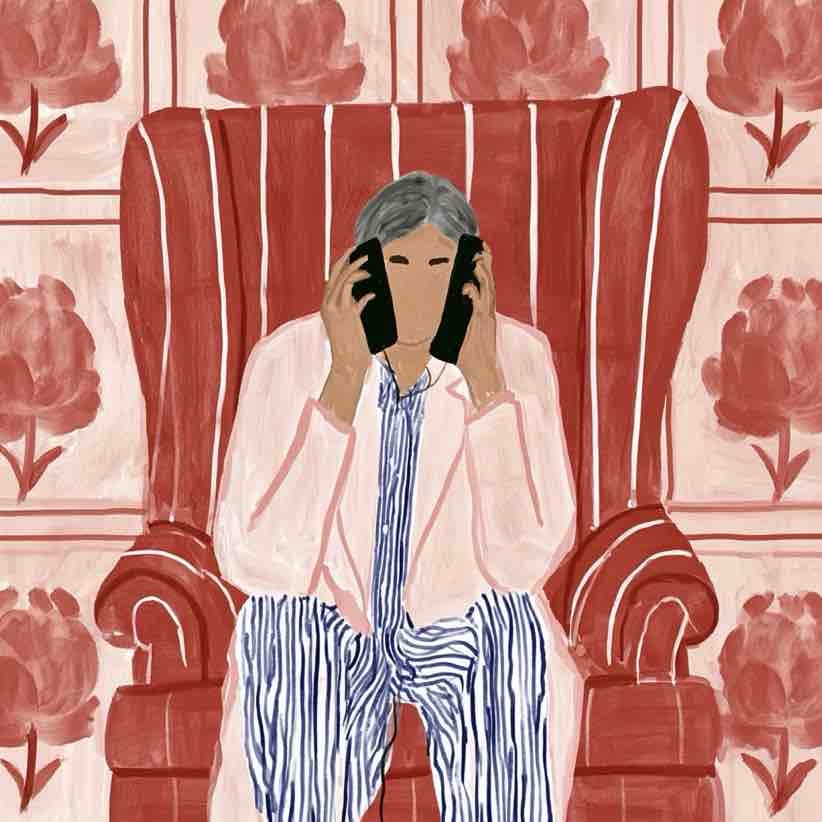
“DPC physician perspectives show how differences strengthen the movement.”
For years we’ve used the same language to describe our escape from the insurance-based system:
It’s broken.
It’s collapsing.
It’s unsustainable.
It’s killing us.
It’s hurting patients.
All true. But incomplete.
Those words describe the system, but they don’t describe us, the physicians who walked away from it. Because the moment we left, something else happened:
We became trauma-informed doctors who understand exactly how harm is created, and exactly what it takes to rebuild from its rubble.


We weren’t just fleeing burnout.
We weren’t just seeking autonomy.
We weren’t just done with seven-minute visits and RVUs and screens that demanded we justify care more than we provided it.
We were doing something the system has never had the courage to do:
We recognized a failing structure and refused to keep participating in the lie.
That matters.
Because the rest of medicine is still inside that lie.
We are outside it.
And that changes everything.
The Divide in DPC Is Not a Weakness — It’s Evidence of Freedom
People look at DPC and assume fragmentation:
Why does one doctor charge $70 and another $249?
Why does one cap at 150 patients while another cares for 700?
Why does one do procedures and another refuse?
Why are some virtual, some hybrid, some rural, some urban, some holistic, some tech-forward?
Underneath those questions is a quiet accusation:
If you were unified, you’d look the same.


But here’s what only those of us who lived through the system can see:
If we looked the same, we’d still be trapped in it.
The divide isn’t division.
It’s differentiation.
It’s what happens when physicians finally stop contorting themselves into insurance-driven obedience and instead create medicine that fits their values, identity, bandwidth, and brain.
We left because the system didn’t work for us.
Why would we replicate it?
This is autonomy.
This is survival.
This is evolution.
DPC Is Not a Model. It’s an Ecosystem.
We keep calling DPC a movement, and yes, it is.
But it’s also something far more powerful:
A decentralized, interoperable medical ecosystem built on trust instead of billing codes.
And we haven’t even begun to understand what we’ve built.
Here is what it could look like in real life as our network evolves:
A patient visiting family in Florida gets sudden symptoms.
My colleague sees them.
She knows me. I know her.
Care continues seamlessly when they return.
Another patient needs a vasectomy. One of us does it.
A patient in perimenopause. I do it.
A patient with mobility issues. Someone does home visits.
A rural patient needs an X-ray at cost. A DPC doctor has negotiated it.
A traveler needs urgent guidance. Another DPC physician responds.
This isn’t fantasy.
This is the direction we are heading: a community-driven, physician-built ecosystem that already exists in pieces and will only deepen if we keep choosing connection over competition.

We Haven’t Even Touched the Ceiling of What DPC Can Become
Right now most of the country still believes DPC is “membership primary care” or “concierge but cheaper.”
They have no idea.
They don’t see:
- barter systems rural DPCs use when cash fails
- transparent pricing that restores access
- micro-specialty skills living inside each doctor
- the referral networks forming between independent clinics
- the emerging digital scaffolding
- cross-state collaboration on the horizon
- the clinical depth that comes from time
- the collective power of physicians who know their worth
- the resilience built into decentralization
They don’t understand that when the system collapses (and yes, it will) we are the net.
Insurance can’t flex.
Hospitals can’t flex.
Corporations can’t flex.
Doctors can.
We always have.
And in DPC, for the first time in decades, we are flexing together.

The Origin Story We Forgot to Tell: Medicine Always Began With Community
If we want to understand where medicine is going, we have to remember where it came from.
My grandfather was a surgeon in a rural Indian town so poor that money often didn’t exist.
Patients paid with vegetables, labor, respect, and loyalty.
He built the clinic.
He built the hospital.
He never turned anyone away.
He was practicing DPC decades before the term existed.
Medicine did not begin with insurance.
Medicine began with service.
With relationship. With community. With trust.
We didn’t invent DPC. We remembered it.

6 Medical Terms that Can Be Confusing
David Epstein, MD, MS, FAAP: This article discusses six medical terms that parents should understand better, from a medical professional’s perspective.

Unveiling the Power of “Share the Ignorance”
David Epstein, MD, MS, FAAP discusses how we don’t know everything and sometimes we need to “share the ignorance”.
What We’re Really Seeing Now: The Physician Identity Repaired
Doctors who left to build DPC didn’t just create new clinics.
We rebuilt ourselves.
We remembered:
- that we are diagnosticians
- that we are advocates
- that we are educators
- that we are community builders
- that we are autonomous professionals
- that we are accountable to patients, not corporations
- that remembering is powerful.
It’s also threatening to the institutions that depended on our exhaustion and silence.
But the more visible we become, through media, writing, patient stories, and networked care, the more the system’s failures are exposed.
We are not the collapse.
We are what comes after it.
We are the proof that rebuilding is possible.
So yes, the doctor divide exists, and it’s exactly the point.

DPC doctors are different because doctors are different.
There is no ideal panel size.
No ideal fee.
No purity test.
No single correct way to practice.
The diversity within the movement is the movement.
If we ever lose that, we become the very thing we left.
The Future of DPC Isn’t Uniformity. It’s Interdependence.
What DPC needs next isn’t standardization, it’s recognition:
- of our differences
- of our strengths
- of our shared trauma
- of our collective potential
- of our responsibility to each other
- of the ecosystem we’re quietly build ing
We don’t need to collapse the doctor divide.
We need to understand it, name it, and use it as a structural advantage.
Because this divide (this diversity) is how we scale ethically.
It’s how we remain human.
It’s how we stay free.
It’s how we ensure the next generation of physicians inherits a profession worth entering.
DPC isn’t the only way forward, but it is one way back to ourselves.
Every doctor deserves a practice that doesn’t break them.
And whatever comes next in medicine, physicians must lead it.