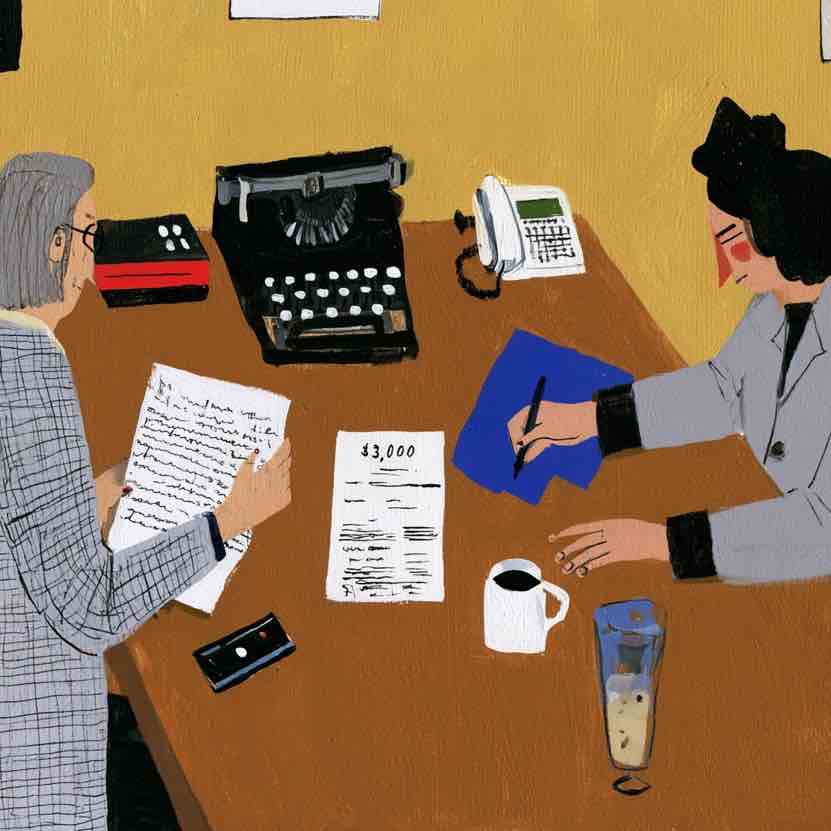
Physicians spent decades becoming experts in medicine. Somewhere along the way, expertise and authority began to separate.
There is something peculiar about the modern hierarchy of medicine. A physician can spend four years in college, four years in medical school, another three to seven years in residency and fellowship, pass a procession of examinations, accumulate thousands of hours caring for patients, and emerge as one of the most highly trained people in the healthcare system. Then that physician can walk into a meeting and discover that the decisions governing how care will be delivered have already been made by people who will never deliver it.
This is not necessarily because those people are incompetent, malicious, or even wrong. Hospitals need administrators. Medical groups need people who understand finance, operations, compliance, technology, staffing, insurance contracts, human resources, and the thousand other things required to keep a complicated organization functioning. Healthcare is too large and too complex to be run entirely from the exam room. The interesting question is how far the pendulum has swung, and what happens when the people with the deepest understanding of the work gradually lose authority over the conditions under which that work is performed.

For much of American medicine’s history, physicians occupied a very different position. The local doctor might have owned the practice, employed the staff, decided how many patients could reasonably be seen in a day, and determined how the office functioned. Hospitals certainly had administrators, and physicians were hardly free from regulation or economic pressure, but the doctor was more likely to possess something that has become increasingly scarce in contemporary medicine: leverage. The physician’s expertise, reputation, patient relationships, and economic value existed closer to the physician.
Over the past several decades, healthcare consolidated. Independent practices were acquired. Hospital systems grew. Insurance companies merged. Large multispecialty groups expanded. Private equity entered portions of medicine. Electronic health records became essential infrastructure. Compliance requirements multiplied. The business machinery surrounding the clinical encounter became larger, more sophisticated, and increasingly capable of measuring what happened inside it. Meanwhile, more physicians became employees.

Employment brought advantages that should not be romanticized away. Running a medical practice can be exhausting. Payroll has to be met. Staff leave. Insurance claims are denied. Technology breaks. Rent rises. Regulations change. Many physicians willingly exchanged some independence for a salary, benefits, administrative support, and the ability to finish seeing patients without going home to negotiate a copier lease. For many, employment remains exactly the arrangement they want.
The consequences of that exchange become more complicated when employment begins to change the distribution of authority itself.
Consider the ordinary workday. Someone determines the length of an appointment. Someone establishes productivity targets. Someone decides which electronic health record will be used and how it will be configured. Someone chooses staffing ratios. Someone designs inbox workflows, referral systems, quality metrics, documentation requirements, scheduling templates, and the increasingly elaborate mechanisms by which a physician’s work is counted. Each decision may be perfectly defensible on its own. Collectively, they define the environment in which medicine is practiced.
The physician often enters that environment downstream. This creates one of the stranger contradictions in professional life. We tell physicians that clinical judgment requires extraordinary training, then construct workplaces in which their judgment over the architecture of clinical care can be surprisingly limited. A physician may be trusted to recognize sepsis, disclose a devastating diagnosis, decide whether a patient needs surgery, or distinguish a dangerous symptom from an innocuous one. The same physician may have little ability to decide whether a twenty-minute appointment should actually take thirty.
The issue extends beyond scheduling. Expertise is intensely contextual. A spreadsheet can tell an organization how many patients a physician saw. It cannot easily capture the difference between a straightforward follow-up and the patient who arrives with six medications, three new symptoms, an abnormal scan, a frightened spouse, and a diagnosis that changes the course of a family. A dashboard can measure whether a note was closed. It has considerably more difficulty measuring whether a physician noticed the hesitation in a patient’s voice and asked one additional question that altered the entire encounter.
Healthcare organizations understandably gravitate toward what can be measured. Medicine repeatedly confronts them with things that resist measurement.

That tension helps explain why many conversations about physician burnout feel incomplete. The discussion frequently arrives at workload, documentation, staffing, inbox volume, or compensation, all of which matter. Underneath them sits another variable that is harder to quantify: agency. People experience work differently when they believe they have meaningful influence over how it is done. A demanding profession can remain deeply satisfying when the person doing it retains a sense of ownership. Even work that once felt purposeful can become demoralizing when the worker feels increasingly interchangeable inside a system designed elsewhere.
Physicians themselves participated in this transformation, sometimes enthusiastically. Many did not want to run businesses. Some sold thriving practices because the economics of independence became increasingly difficult. Others entered medicine after consolidation was already well underway and have never practiced in a world where physician ownership was the norm. A younger doctor may have spent an entire career moving among employers and reasonably regard the independently owned practice as something closer to medical folklore than a realistic professional default.

The answer, then, cannot simply be that every physician should open a practice. Nor does physician leadership require putting a doctor in every executive position. Clinical expertise does not automatically confer expertise in organizational management, accounting, employment law, or hospital finance. Physicians can make terrible executives, just as executives can make terrible decisions about clinical work.
The more useful question is whether healthcare has built structures in which clinical expertise carries enough weight when decisions about clinical work are made.
That question becomes especially important as medicine enters another period of technological change. Artificial intelligence is moving into documentation, triage, diagnostic support, utilization review, scheduling, patient communication, and administrative workflows. The people choosing these systems will influence how physicians practice for years. If clinicians arrive only after the procurement decisions have been made, they will once again inherit the architecture rather than help design it.
This is where physician leadership becomes more consequential than the familiar invitation to “have a seat at the table.” A seat is symbolic if everyone else has already chosen the menu. Meaningful leadership requires physicians to understand the forces shaping their work well enough to participate before the decisions become irreversible. That includes learning subjects medicine historically treated as peripheral: contracts, negotiation, finance, organizational behavior, technology, media, ownership, policy, and the economics of healthcare.
It also requires physicians to reconsider their relationship with one another.
In a video created for SoMeDocs’ #EverySingleDay campaign (we’ve included that video on the sidebar here), physician James O’Leary speaks about physician employment and the need for doctors to work together toward a healthcare system that functions better. His point raises a larger problem that medicine has never fully solved. Physicians are extraordinarily organized around training and specialty. They are considerably less organized around professional leverage.
Medicine fragments its doctors almost from the beginning. We become internists, surgeons, pediatricians, anesthesiologists, radiologists, psychiatrists, dermatologists, and dozens of increasingly narrow subspecialists. We divide again into academic and community physicians, employed and independent doctors, proceduralists and cognitive specialists, owners and employees. These distinctions are professionally meaningful, yet they can also make it difficult for physicians to recognize how many structural problems they share.
The organizations surrounding them have had fewer reservations about scale, and perhaps that is the most important shift to understand. The future of physician autonomy may depend less on returning medicine to an earlier era than on figuring out what professional power should look like in the era that actually exists. Ownership remains one route. Leadership is another. Collective advocacy, entrepreneurship, independent platforms, physician-built technology, professional communities, and control over one’s intellectual property can all create forms of leverage that do not require recreating the neighborhood medical practice of 1975.

None of these guarantees that physicians will get their way, nor should they. Patients have interests. Nurses and other healthcare professionals have expertise. Administrators have responsibilities physicians may barely see. Healthcare will always involve competing priorities, finite resources, and uncomfortable compromises. A functional system has to accommodate all of them.
What it cannot afford to do is confuse administrative authority with clinical understanding.
The most highly trained person in the room does not always need to be in charge. There are plenty of rooms in healthcare where the physician should not be. But when the conversation concerns what happens between a clinician and a patient, how much time that interaction requires, what tools shape it, what pressures distort it, and what conditions allow good medicine to occur, the person who spent a decade learning how to do that work should carry more than an advisory vote.
Medicine depends on expertise. The healthcare system depends on organization. Somewhere in the enormous structure we have built around the two, we need to make sure expertise still has enough authority to matter.