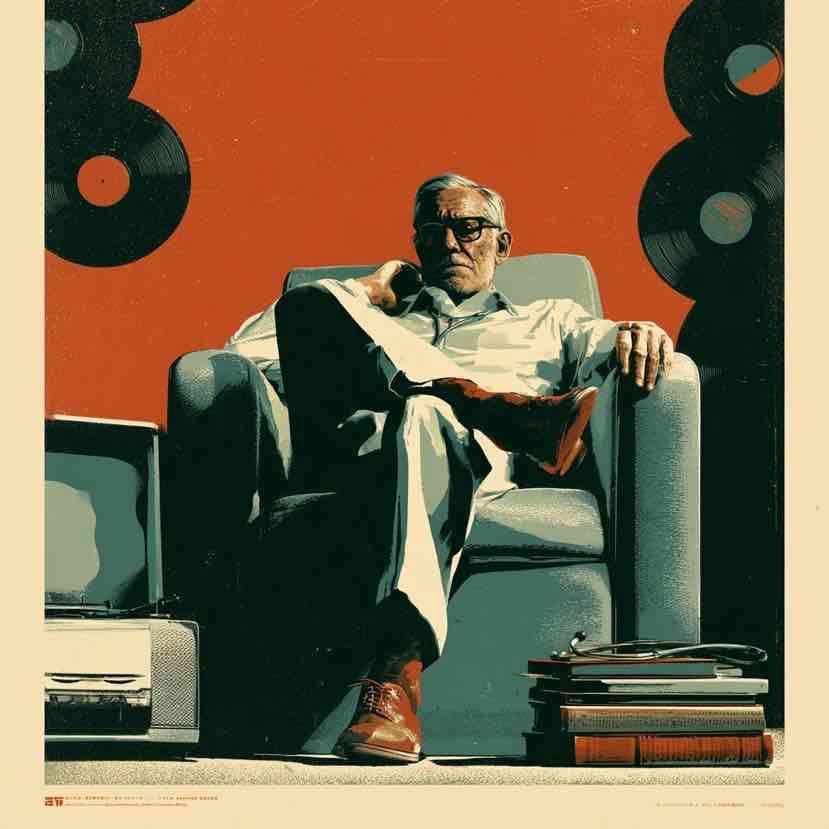
I have spent most of my adult life in medicine. As an obstetrician gynecologist, I have been invited into some of the most intimate moments of people’s lives. I have delivered babies, sat beside women after pregnancy loss, cared for people through illness, surgery, pain, sexuality, infertility, aging, fear, and enormous change.
There is something sacred about that exchange. One human being sits across from another and says, in one form or another, something is happening to me, help me.
And somewhere along the way, we built a medical system that makes that human encounter increasingly difficult.
We talk often about how medicine is failing patients. We talk about rushed appointments, fragmented care, lack of access, insurance companies, enormous costs, medical errors, and inequity. All of that is real. But medicine is failing physicians too, and I don’t think these are two separate problems. They are the same problem.
For years, I practiced in environments where seeing 30 or more patients in a day was normal. Seven minutes, ten minutes, fifteen if you were lucky. You walk in, ask the questions, examine, diagnose, prescribe, document, and move on to the next patient. There is tremendous skill involved in practicing medicine efficiently, and sometimes speed saves lives. Protocols matter. Evidence matters. Systems matter. But human beings do not experience their bodies in algorithms.

A woman coming to see me for pelvic pain may also be carrying sexual trauma. Someone asking about low desire may actually be trying to tell me something about her relationship, her body, or how safe she feels inside it. A pregnant woman may be joyful and terrified at exactly the same time. Someone sitting across from me after a miscarriage does not simply have a diagnosis of pregnancy loss. She may be grieving a future she had already begun imagining.
If I have ten minutes, I may be able to treat the condition, but I may completely miss the human being.
Modern medicine is extraordinary. I have watched it save lives. I have seen hemorrhage stopped in minutes, babies delivered safely from impossible circumstances, cancers diagnosed early, infections treated, and bodies repaired. I would never want to practice in a world without modern medicine. But in becoming extraordinarily good at treating disease, I think we have sometimes forgotten how to care for the person experiencing it.
Physicians have paid a price for this too. We train doctors to tolerate exhaustion, to eat later, sleep later, go to the bathroom later, grieve later, and keep moving. Then we build systems that measure almost everything about our work except the parts that originally made many of us want to become doctors.
How do you measure the moment a frightened patient finally trusts you enough to tell you what is actually happening? How do you measure presence or trust? How do you measure the hand you hold while giving terrible news, or the extra twenty minutes that completely change your understanding of someone’s illness?
We don’t know how to measure these things, so increasingly we don’t create time for them.
Physicians adapt. You develop armor. You learn to move quickly from suffering to suffering because there are five other people waiting. You finish a devastating conversation and walk into the next room. There is always another patient, another delivery, another chart, another result, another message.
Eventually we call what happens to physicians burnout, but I have become uncomfortable with that word. Burnout makes it sound as though something has gone wrong inside the doctor, as though we failed to meditate enough, exercise enough, practice gratitude, or become resilient enough. Maybe the more important question is what kind of system requires human beings to become less human in order to function inside it?

Patients feel this loss too. They know when we’re rushing. They know when we’re looking at the computer instead of at them. They know when their story has become an obstacle to getting through the visit. And then they go elsewhere looking for what they are missing. Sometimes they find extraordinary care and sometimes they find misinformation.
Medicine often responds by asking why patients no longer trust us. I think we also have to ask ourselves what they were looking for that they weren’t finding with us.
Often it wasn’t another test or another prescription. It was time, curiosity, agency, relationship, and someone willing to ask not only what is wrong with you? but what is happening to you?
The longer I practice medicine, and the more life I live, the less interested I am in the artificial separation between physician and human being. My medical training taught me extraordinary things, but so have grief, motherhood, love, loss, fear, my own changing body, and sitting with other human beings in their most vulnerable moments.
None of this has made me value science less. It has made me understand more clearly what science can and cannot do. Science can tell us which treatment is most likely to work, but it cannot tell us what gives someone’s life meaning. A laboratory value cannot describe grief. An MRI cannot measure dignity. A diagnostic code cannot capture what it feels like to lose a pregnancy, fear childbirth, face cancer, lose desire, or suddenly feel unfamiliar inside your own body.

Medicine needs science, but healing also requires relationship.
I don’t want to abandon medicine. I want medicine to remember what it is for. This isn’t an argument against physicians, hospitals, technology, or evidence-based care. It is an argument for making medicine large enough to contain the human being again, and that includes the physician.
Patients are angry and physicians are exhausted, and increasingly each experiences the other as part of the problem. But most doctors I know did not enter medicine wanting to spend their lives staring at electronic medical records, and most patients don’t walk into our offices wanting to distrust us. Something has been lost between us.
Underneath all of our roles, there are simply two human beings on either side of the room. One is saying, I am scared. Please help me. And perhaps, in a quieter way, the other is saying, I want to help you. Please give me the time and space to do it.
Maybe the future of medicine doesn’t begin with another technology, another metric, or another optimization strategy. Maybe it begins by remembering something much simpler: the patient is human, the physician is human, and neither of us should have to leave our humanity at the door.