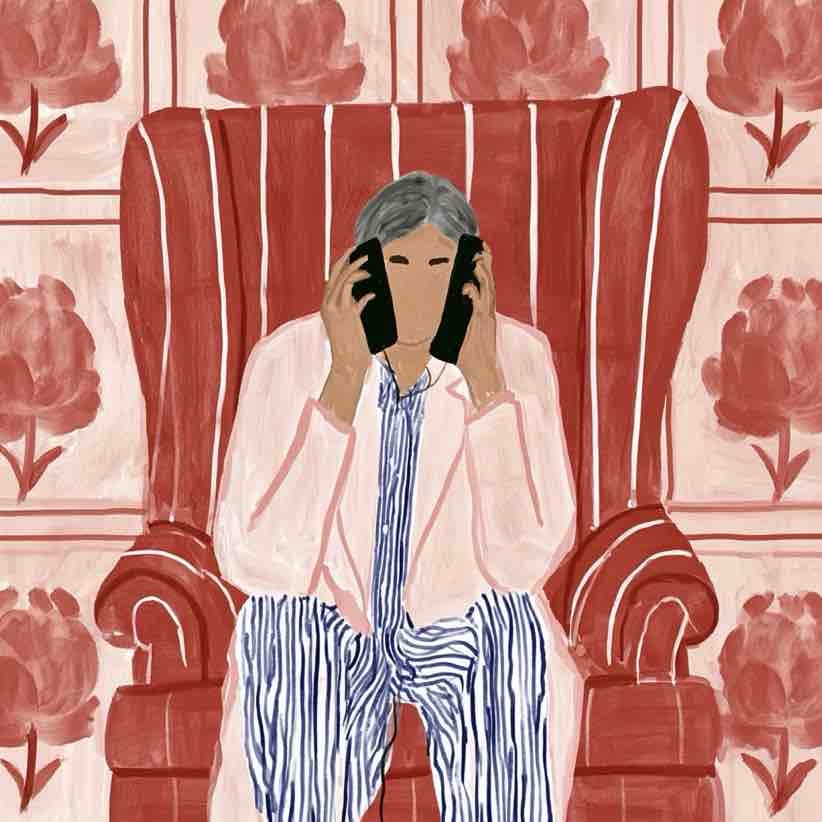
“Resilience” has become one of healthcare’s favorite words.
It carries an appealing assumption: that human beings can repeatedly absorb stress and somehow return to their original form. Applied to physicians, however, that expectation can become something darker. It can reduce a human being from an end in themselves to an instrument of production, expected to absorb moral injury, chronic stress, and the weight of human suffering, then report back tomorrow ready to do it again.
To be clear, psychological resilience, properly understood, is more nuanced than simply “bouncing back.” My objection is to what healthcare organizations have often made of the word: an expectation that clinicians adapt indefinitely to conditions the institution itself has failed to repair.
The absurdity deepens when an entire industry of vendors markets “resilience packages” directly to healthcare workers, treating systemic institutional failure as an individual skill deficit best cured by a smartphone algorithm.
So, do I want to be resilient?
The simple answer is: No, thank you.
I. A Failure to Communicate
Let’s begin with a brief act of psychological hygiene: acknowledging that people who deploy impressive-sounding words to dress up administrative neglect as rigorous organizational science occasionally deserve to be made fun of.
Not with genuine malice, mind you.
But there is something worth examining about the language healthcare uses for its own workforce: fatigue, burnout, resilience, throughput. These are words that sound remarkably at home on a factory floor.
Medicine insists upon precision and clinical accuracy in nearly every other domain. Why should the vocabulary governing our own human experience be exempt?
Which brings us to the heart of the issue: the weaponization of vocabulary against the very people practicing the craft.

II. The Co-Option of Stoic Endurance
Running beneath administrative rhetoric is a romanticized mythology of American “grit.” Through a quiet act of literary vandalism, healthcare has co-opted the Hemingway myth of stoicism, the belief that strength is forged by endlessly enduring in silence.
By emphasizing resilience over growth, we have absorbed his famous posture that we grow “strong at the broken places” and turned it into an expectation, pretending that a person’s body and spirit can be repeatedly fractured without eventually giving out.
Yet the human body tells us otherwise.
We assess, document, and repair what happens when physical forces exceed biological limits. Tissue tears. Bone yields. Blood leaks. Organs fail.
In engineering, resilience describes the elastic strain energy a material can absorb before reaching its yield point, the threshold beyond which it permanently deforms under stress. Flesh, blood, and living tissue do not behave like an engine block or forged girder. Anyone working the floor of a busy emergency department understands this.
Human neurobiology doesn’t work that way either. Living nervous systems carry trauma and memory. Hammers, gaskets, and drill bits do not.
When clinicians are repeatedly exposed to moral injury, chronic overload, death, fear, and human suffering, expecting them to simply return to baseline ignores something fundamental about being human: experiences leave marks.
To witness vulnerability every day and then be lectured on “cultivating resilience” can feel absurd. If the clinician is the gasket, the Wellness Task Force risks becoming the grease ensuring reliable, ongoing performance.
That isn’t human flourishing.
It is attrition dressed in better language.
III. The Forgotten Telos, or What Was Supposed to Grow
Pull back far enough from the corporate wellness retreat to clear your nostrils of the lavender essential oils, and you are confronted by another problem: modern healthcare has largely forgotten the concept of teleology.
Teleology, in the classical sense, is the idea that living things have a direction of growth. Seedlings become oaks. Artisans become masters. A life spent in a craft is supposed to transmute raw, frantic youth into something dense, experienced, and useful that contributes to the generations that follow.
Twenty-five years ago, when I first put on a white coat, I did not sit in a lecture hall praying to the ghost of Hippocrates, “Grant that two decades from now I may be successfully non-charred.”
I wanted to grow into the quiet, terrifying competence of my role models, clinicians who could scan a chaotic resuscitation bay and anchor an entire team around the needs of a patient.
That is a very different aspiration from survival.

IV. P.M.A.: An Acronym for Growth
There is profound comedy in watching an administrative apparatus earnestly charter a “Wellness Task Force” while hospital floors mutter about what the acronym actually spells.
Since corporate leadership loves initialisms, let’s borrow one that might actually be useful: P.M.A., or Positive Mental Attitude.
P.M.A. was popularized in punk culture by Bad Brains, four pioneering Black musicians navigating a hostile punk ecosystem while playing at blistering speed. Their version of P.M.A. represented spiritual sovereignty and human dignity under pressure.
I want to borrow the acronym and propose a version for medicine built around three ideas: Pragmatic Empathy, Mastery, and Authentic Humility.


P: Pragmatic Empathy
Healthcare has too often reduced empathy to scripted phrases, warm blankets, and satisfaction scores in a real-world environment where the “customer” isn’t always right.
Sometimes we have to tell people things they don’t want to hear or recommend things they don’t want to do. We can do that while remembering that patients are neither adversaries nor customers.
Pragmatic empathy is human connection reclaimed as a deliberate clinical instrument.
It is stepping into a room consumed by panic, with a family struggling to understand what “metastatic” means, identifying the shape of their terror, cutting through the existential noise, and speaking clinical truth directly into that reality without flinching.
It does not require absorbing their panic. It requires projecting enough presence that they feel safe enough to breathe.

M: Mastery
A career in medicine was never meant to be a process of gradual exhaustion. It was meant to be an artisan’s journey.
Where resilience asks how much pressure you can absorb, mastery asks how much technical and cognitive competence you can build.
It is the deliberate accumulation of craft, technical speed, judgment, and emotional depth over a lifetime of practice.
It is running a resuscitation bay while maintaining absolute internal silence. It is anticipating physiologic collapse three steps ahead of the telemetry monitors, lowering your voice an octave, and owning the room through precision rather than volume.


A: Authentic Humility
Authentic humility begins with the uncompromising acceptance of human limitation.
It acknowledges that this craft exacts a measurable toll and that admitting this is not a failure of character.
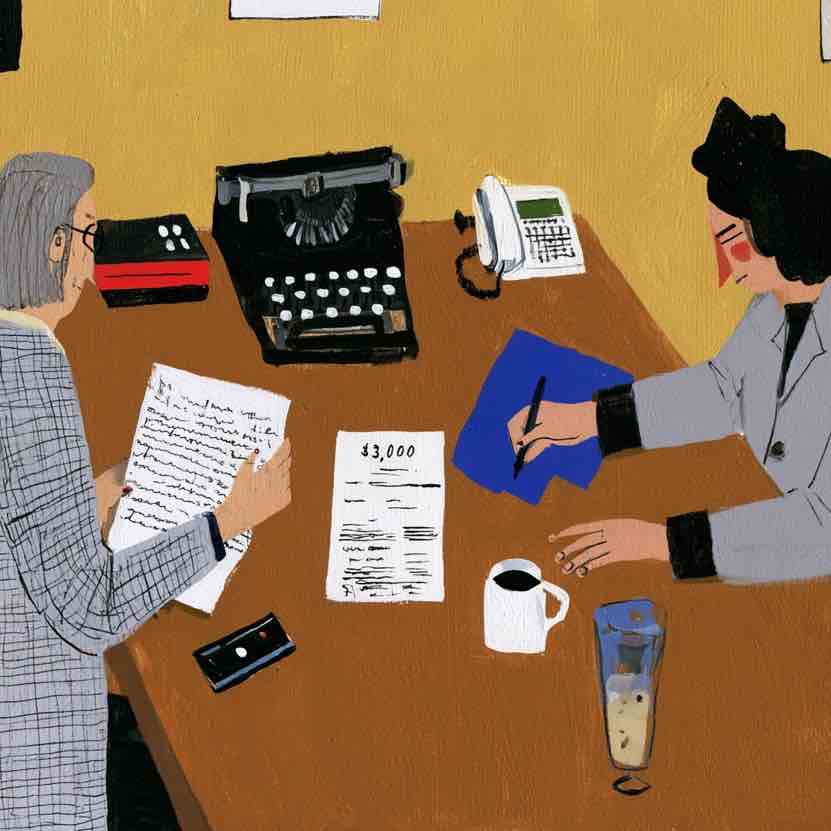
It is peeling off your gloves after the death of a patient, looking at the telephone, and confronting the brutal task ahead: calling a daughter five hours away and delivering words that will divide her world into before and after. The word ‘expired’ doesn’t come up until I hang up the phone, complete the paperwork and finally reach the disposition screen— a betrayal of the respect for the life that was just lost (read A Guide to Deciphering Corporate Kant for the Cynically Inclined, for more context).
Dialing the numbers and praying she picks up will feel brutal. The conversation will leave a mark on both of you, infinitely heavier on her end of the line, but a mark nonetheless.
There is courage in existing in that moment with another person, unguarded and connected only by a telephone, while accepting the human cost of the craft without armor.

V. Beyond Resilience, or Reclaiming the Craft
Critiquing the semantics of administrative jargon might seem trivial, a pedantic exercise in splitting hairs over corporate vocabulary.
It isn’t.
The version of resilience I reject carries a silent premise: this shouldn’t bother you.
If you are sufficiently resilient, systemic failure and human devastation will simply bounce off without leaving a mark.
My response is simple: It does bother me.
That is the entire point.
Demanding that clinicians remain untouched by what they experience is not an offer of support. Taken far enough, it becomes a mandate for dissociation, asking us to behave like unfeeling gaskets so institutions can avoid confronting their own structural failures.

Here is another inconvenient truth: expecting an institution to nurture your spirit is its own kind of surrender.
P.M.A. doesn’t ask you to pretend the awful thing didn’t happen. It acknowledges that moral injury and human suffering can fundamentally alter your worldview. Then it asks what you are going to build from what you have witnessed.
Pragmatic Empathy because you refuse to let cynicism dilute your ability to connect.
Mastery because your craft deserves a lifetime of refinement.
Authentic Humility because medicine has limits, and so do you.
Our words are among the most powerful tools we have. We should not speak or repeat them carelessly, and we do not have to surrender our vocabulary to industrial metrics.

Perhaps the goal of a career in medicine was never to keep returning to the person you were before the last terrible shift, the last impossible case, the last death, the last failure.
Maybe you aren’t supposed to bounce back.
Maybe you’re supposed to grow.
One shift, one room, and one patient at a time.
And to those preaching resilience?
Smile back.
Keep up the P.M.A.