For more than two decades, Dr. Benjamin Bergman has listened closely to the rhythms of the human heart. As a board-certified cardiologist based in New Jersey, his work has demanded precision, rationality, and scientific rigor. But Bergman’s fascination with the human condition has always stretched beyond lab results and imaging reports. It extends into the unseen world of memory, meaning, and story. Now, with the release of his debut novel, Shocking Late-Night Encounters With Self, Bergman steps into a new role: author. His fiction pulls from years of observing vulnerability and resilience in patients, from his own struggles and triumphs, and from the restless search for identity that weaves through every life.
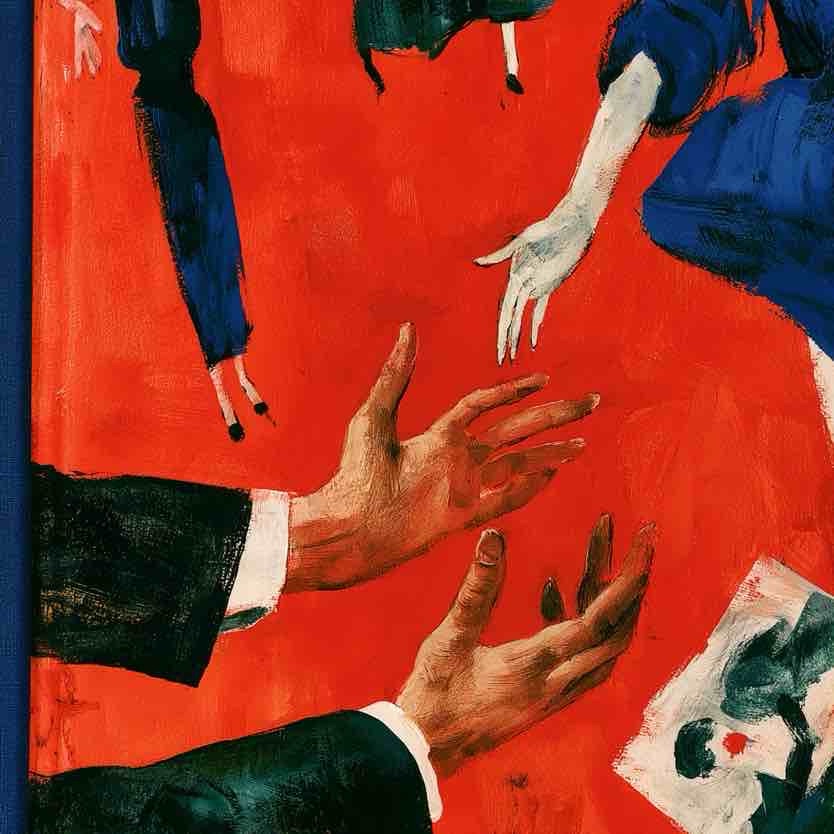
The novel follows Kyle, a young man adrift on the Upper East Side of New York City, whose world is upended by a letter from an ex-lover. The letter becomes a spark for encounters, reflections, and confrontations that ripple through his relationships and sense of self. From chaotic roommates to dreamlike wanderings through Harlem and Paris, the narrative mixes nostalgia with discovery, loss with reinvention. It is a story, Bergman says, about the shocks we encounter within ourselves, and how they force us to reckon with both the chaos inside and the pressures outside.
For Bergman, the inspiration for writing began years ago with one startling late-night moment. Walking near Columbia University, a stranger suddenly shouted at him, “Boy, you got no business being here, what the f*** you doing here?” The experience unsettled him. “I had never experienced that type of treatment. I felt so out of place, and it made me think differently about everything in my surroundings and everyone near me,” he recalls. What could have been brushed off as an odd encounter became, instead, a lens. Bergman carried it with him, reflecting on how rejection, belonging, and external forces shape identity. “It started my writing career,” he says. “I felt like an unwelcome traveler stuck in a hostile whale the size of a city. But I loved the city, even if I wasn’t sure it accepted me.”
Those contradictions (loving something that unsettles you, seeking meaning in rejection, learning about yourself by listening to others) are embedded in the novel’s themes. They also mirror Bergman’s medical career. Training at Bellevue Hospital immersed him in the lives of patients struggling with substance abuse, poverty, and mental illness. It was there he realized that medicine was not only about biology, but about story. “If the doctor doesn’t know your story, they don’t know you,” he says. “They may know vitals and labs, but if they’re not taking into account the stress, the sleep, the social dysfunction, the loss, the grief, you’re missing half or more of the story.”
Writing fiction, then, became another way of honoring those stories, exploring not just what drives disease, but what drives behavior. For Bergman, the internal and external are constantly in conversation. “The realization in those shocking moments, staring at a mirror at 2AM not even recognizing yourself, is that you have to look at the external forces as much as the internal forces,” he reflects. “I haven’t changed really, so why does everything feel so chaotic around me?” That tension between self-discovery and outside influence pulses through Kyle’s journey in Shocking Late-Night Encounters With Self.
Balancing medicine and writing has been less of a conflict than one might expect. Bergman sees science and creativity as deeply intertwined. “The scientific and the creative are not mutually exclusive,” he says. “Understanding why the sky is blue renders the universe in your mind and makes you want to describe it. Science can be poetic as hell.” His writing process, however, has been anything but orderly. Sometimes he dictates notes into his phone on his way to work, sometimes he scribbles between patient visits, and sometimes he loses entire weekends to furious writing sessions. And just as often, he goes weeks without writing, letting life itself refill the well. “You can’t write if you don’t live,” he says.

Behind his fiction lies a deeper current of lived experience, especially the impact of illness on his family. When Bergman was a child, his older brother was diagnosed with cancer at 14. The experience shaped his decision to become a physician and instilled an early reverence for the doctors who had saved his brother’s life. Years later, when his brother’s cancer returned, Bergman was again forced into self-discovery, not only as a doctor but as a brother and guardian. He and his wife took in his brother’s three children after both parents faced life-threatening illness, raising them alongside their own kids. “It wasn’t pretty, but we got through,” he says. “I learned resources I didn’t know I had, and I learned how many mistakes you can make and still move forward.” These experiences of grief, resilience, and unexpected growth echo in the emotional layers of his novel.
Publishing fiction is, for Bergman, a vulnerable act. “It takes a lot of confidence to bare your soul, to send your thoughts into the great wide ocean of the world,” he admits. But his bar for success is disarmingly modest. “If there’s one person who identifies with my writing, who feels less alone, then the risk is worth it.” Already, readers have begun connecting with Kyle’s journey of regret and reinvention, reflecting back to Bergman that the questions at the heart of his book (about identity, loss, and meaning) are universal.
While Shocking Late-Night Encounters With Self marks his debut, Bergman is not done writing. He is already at work on a nonfiction book, tentatively titled Cardiology: Everything You Want to Know. Case-based and conversational, it aims to make cardiovascular science accessible while pushing back against misinformation. “We have 50 years of randomized trials and a huge dataset of effectiveness,” he says. “But we’re seeing a countercultural movement against conventional medicine. People need stories and context to understand why treatments matter, why prevention matters.” In a way, this next project brings his two worlds together: the precision of cardiology and the accessibility of narrative.
As Bergman looks ahead, he sees writing not as a departure from medicine but as an extension of it. Both, after all, are about listening, about paying attention to the rhythms of life, whether in a heartbeat or a sentence. His journey from physician to author underscores a truth he lives daily: that healing requires more than prescriptions and procedures. It requires stories. In publishing his own, Bergman offers readers not answers but reflections, not cures but connections. And sometimes, that is enough.