Disclaimer: I respect and appreciate my male colleagues, but I have to talk facts in this article.
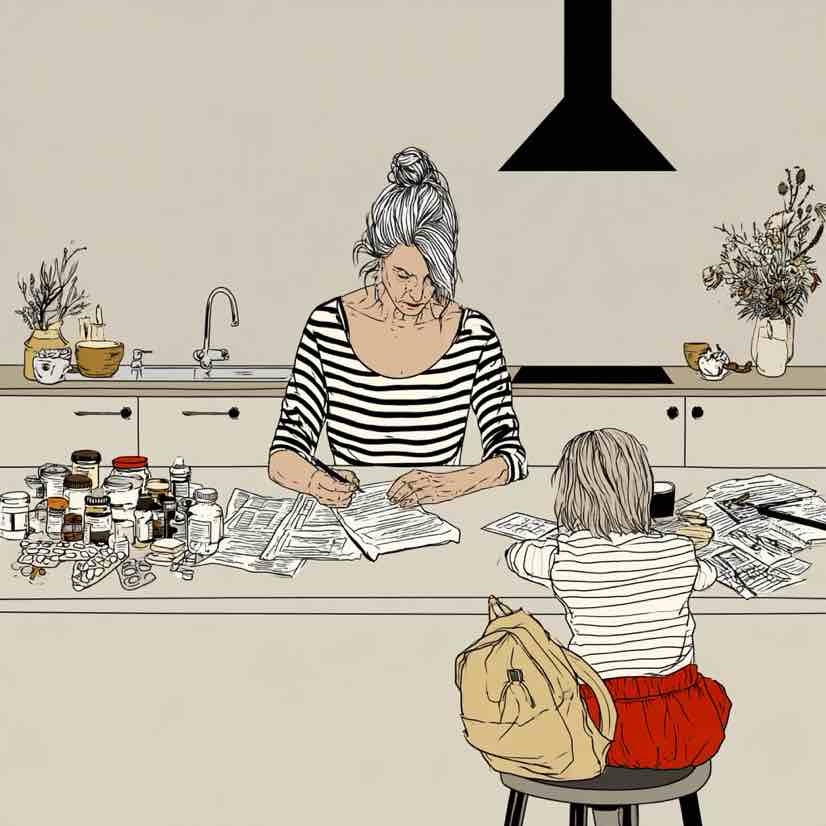
I was still typing away, late into the evening, when everyone else in the clinic, including my male colleagues, had long left. This was a daily occurrence in my former corporate medicine jobs.
Before then, I remember as a young hospitalist noticing the different interactions that patients and staff had with female physicians compared to male.
So of course I thought it was me being good enough.
I must be less efficient.
At one of my corporate jobs I even asked for a time-flow study from my employer. The person who conducted the study was an EHR- superuser. She found that I was very efficient with my time. I would come in early to prepare by reviewing the cart and strategizing the visit so by the time I walked into the exam room my workflow was very streamlined. She even commented that I typed very fast, and my notes were so thorough that a scribe would be downgrade, not add value.
Fast forward to me leaving corporate medicine to start my own Direct Primary Care practice in 2020, I realized very quickly that there are issues and concerns that affect female DPC docs disproportionately. I now understand why a little better.

Two studies published in the last few years gave me a jarring “Aha” moment.
A 2022 study by Rittenberg et al titled Primary Care Physician Gender and Electronic Health Record Workload showed that staff AND patients (~25% each, for average total of over 60 messages per month) make more demands of female docs than male through portals.
I really feel this is more pronounced in the DPC world where there is no buffer between the doctor and the patients.
A recent study by Brandford et al titled The Gender Gap in EHR Workload: A Comparative Analysis of Primary Care Physician In Basket Usage , just published in May 2025 shed more light into the issue. The results indicated that female doctors receive more negative demeaning messages from patients, and we spend more time on our notes, order entry, and take more time to thoughtfully answer portal messages. The clincher? The results indicated that female doctors may be more proficient in EMR use compared to male doctors.
We are not slower or less efficient. That is not the issue. It boils down to this: Being a female doctor is not the same as being a male doctor.
The external factor is that the staff and patients demand more from us.
The internal factor is that we demand more from ourselves.
I recently wrote the article Lady Docs, Protect Your Health, Both Physical and Mental on the fact that female doctors have better patient outcomes at the expense of our own health and expanded on it on the series From Print to Pod.
Both studies adorably concluded that to prevent the further burn out and health damage to the female physician workforce, the corporate medicine system (cough “leadership” cough cough), should engage to develop essential for optimizing EHR workflows, provide equitable support for female physicians, and implement flexible work provisions that ensure safe and sustainable care delivery.
I would not hold my breathe to see that happen. When I left the corporate medicine world 5 years ago, I begged for more time with my patients and for “indirect patient care time”. I was told no. And they acted shocked when I left.

So full disclosure, as a DPC doc that left the system I am vehemently cynical against the system. I hope to one day be proven wrong.
And yes, gender biases exist in the DPC world also. I have discussions with my female colleagues regularly about issues we often face that our male colleagues do not.
I have no way to control what the corporate medicine system does. But I can control my own DPC practice.
I LOVE being a DPC doc, but over the last couple of years, after being in DPC practice for 5 years, I realize that female-led practices must implement different workflows and culture to be sustainable and successful.
We have to price differently.
We have to leverage our tech stack differently to balance automation with personalized care, and take “emotion” out of some simple processes such as scheduling.
We have to set different boundaries than our male colleagues.
That is why my team and I are hosting a retreat for female-identifying doctors in September. Female docs need a space to come together to rejuvenate and discuss these issues with no judgement.
So no, being a female doctor isn’t the same job as being a male doctor – and that’s not whining, that’s data. But here’s the good news: we’re figuring it out. We’re creating new paths, new workflows, new boundaries, and most importantly, new spaces that honor who we are and how we work.
The road isn’t always easy, but it’s ours to shape. And if that means building practices with more compassion, more intention, and maybe even more color-coded Google calendars, then so be it.
Here’s to finding joy in the medicine we practice, building systems that nourish us as much as they support our patients, and to the retreat in September, where we’ll laugh, cry (just a little), share solutions, and remind each other that we’re not alone.
Because being a female-identifying doctor may be different, but it can also be pretty amazing.